Delivering with the Agentic AI Harness
An End-to-End Feature Delivery Playbook
Prescriptive engineering guidance for delivering secure, reliable, production-ready software through the AI-Native SDLC, specification-driven development, and governed human-agent collaboration.
Who this is for. This playbook is written for engineering leaders and practitioners who are responsible for delivering production software with AI agents:
- Heads of AI Engineering, VPs of Engineering, and engineering directors who set the delivery model.
- Principal engineers, architects, and staff engineers who define specifications and constraints.
- AI engineers and AI tech leads responsible for end-to-end delivery using the Agentic AI harness
- Engineering managers and feature owners accountable for delivery outcomes.
- Quality, security, platform, and SRE engineers who build the trust mechanisms around agent output.
What you will learn. After studying this playbook, you will be able to:
- Distinguish agentic coding from end-to-end agentic software delivery, and explain why the difference matters.
- Apply a ten-phase AI-Native SDLC, scaled to the risk of each feature.
- Write specifications, acceptance criteria, and task contracts that agents can execute and independent systems can verify.
- Design verification so that agent-reported success is never the sole evidence of correctness.
- Allocate autonomy to agents according to risk, and enforce that allocation with controls rather than instructions.
- Validate business outcomes in production, and measure delivery effectiveness, economics, and value.
- Convert recurring delivery failures into durable improvements to the harness, the lifecycle, and the application.
Scope and assumptions. This playbook assumes your organization has adopted or built an Agentic AI Harness capable of the following:
- Repository access and context retrieval.
- Agent execution and orchestration.
- Reusable engineering skills and instructions.
- Governed tool invocation.
- Isolated execution environments.
- State management and execution continuity.
- Testing and independent verification.
- Security and policy enforcement.
- Observability and delivery-pipeline integration.
The harness may be built on Claude Code, Codex, an internal platform, or a composition of existing technologies. The guidance is technology-neutral. Building the harness itself is the subject of the companion publication, Engineering the Agentic AI Harness: Architecture, Components, and Design Patterns.
Conventions.
- Normative language. Must, should, and may follow their usual engineering meaning: must marks a requirement, should a strong recommendation, may an option.
- Running example. One feature, TENANT-001 (Automated Tenant Onboarding), recurs throughout. It is a deliberately realistic, mid-sized feature on a multi-tenant SaaS platform on AWS.
- Illustrative content. Specifications, diagrams, metrics, and cost figures are illustrations, not empirical benchmarks.
- Proposed frameworks. The ten-phase lifecycle, the delivery tracks, the agent autonomy levels, and the maturity model are proposed reference models for planning and assessment. They are not industry standards.
- Figures are numbered by chapter (Figure 5.1 is the first figure in Chapter 5).
Abstract
Agentic AI is changing how software is designed, built, tested, deployed, and operated. Engineering teams can now delegate substantial implementation work to AI agents running inside controlled engineering environments. But the ability to generate software quickly is not the ability to deliver software reliably.
Reliable AI-native delivery requires a disciplined lifecycle in which business intent becomes verifiable specifications, architectural decisions, bounded tasks, validated implementations, authorized releases, and measured production outcomes.
The Agentic AI Harness supplies the technical capabilities for this: context, tools, execution, state, policy, and observability. The AI-Native SDLC supplies the lifecycle and governance framework. AI-Native Software Development applies both to real engineering work. This playbook ties them together into a prescriptive method for delivering complete business features, from first discovery through production operations and continuous improvement.
Its central principle is:
Humans own intent, architecture, judgment, and accountability. Agents accelerate execution. Independent verification establishes evidence. Production outcomes determine success.
From Agentic Coding to Agentic Software Delivery
The fundamental transformation
AI coding agents can read repositories, generate implementations, run commands, diagnose failures, write tests, and prepare pull requests. Yet delivering a business feature requires far more than working code.
A single feature may need coordinated changes to user interfaces, backend services, data models, integration contracts, security policies, cloud infrastructure, operational workflows, and production monitoring. Every change must satisfy business requirements, architectural constraints, security expectations, non-functional requirements, and operational commitments.
The challenge is therefore not:
How do we generate more software with AI?
It is:
How do we consistently translate business intent into independently verified, production-ready software through governed human-agent collaboration?
That distinction separates agentic coding from end-to-end agentic software delivery.
Why code generation is no longer the constraint
When implementation becomes fast and inexpensive, the scarce resources shift. They become:
- Clarity of intent: whether the team can state precisely what should be built.
- Verification capacity: whether the team can establish that what was built is correct.
- Review and release capacity: whether humans and pipelines can absorb the increased flow of change.
- Operational trust: whether the result behaves correctly in production.
Organizations that accelerate only the implementation step typically find that queues move downstream into review, QA, and release. This playbook treats the whole value stream as the unit of optimization.
AI-assisted development versus AI-native delivery
| Engineering dimension | AI-assisted development | AI-native software delivery |
|---|---|---|
| Primary unit of work | Coding activity | Complete business feature |
| Requirements | Interpreted by engineers | Structured as agent-consumable, verifiable specifications |
| Architecture | Human-designed | Human-owned, agent-assisted, machine-verifiable |
| Implementation | AI assists individual coding steps | Agents execute bounded engineering workflows |
| Context | Supplied ad hoc in each interaction | Governed, reusable, task-specific engineering context |
| Testing | AI assists test creation | Independent verification integrated throughout delivery |
| Governance | Conventional development controls | Risk-based human-agent execution controls |
| Delivery | Conventional SDLC with AI assistance | AI-Native SDLC supported by the harness |
| Accountability | Human engineer | Human engineer supported by execution evidence |
| Success measure | Individual productivity | End-to-end delivery effectiveness and business value |
Adopting more autonomous coding tools does not by itself produce this transformation. It also requires changes to engineering practice, lifecycle controls, team responsibilities, architecture standards, and the organizational operating model.
Key takeaways — Chapter 1
- Delivering a feature is a larger problem than generating code for it.
- As implementation accelerates, intent, verification, review, release, and operations become the constraints.
- Optimize the value stream end to end, not the coding step alone.
The Conceptual Framework
The engineering ecosystem
AI-Native Software Engineering involves several related concepts. Using them precisely avoids a common source of confusion: treating the harness, the process, and the practice as one thing.
| Concept | Classification | Responsibility |
|---|---|---|
| AI-Native Software Engineering | Overarching discipline | Integrates AI into the entire software engineering ecosystem |
| Harness Engineering | Enablement discipline | Designs, builds, operates, and evolves the harness |
| Agentic AI Harness | Technical system | Provides agentic execution capabilities: context, tools, orchestration, state, policy, observability |
| Harness Execution Infrastructure | Technology infrastructure | Hosts and isolates harness workloads |
| AI-Native SDLC | Process framework | Defines lifecycle phases, responsibilities, artifacts, and governance controls |
| AI-Native Software Development | Engineering practice | Performs software engineering through human-agent collaboration |
| Business Application | Software product | Implements business capabilities |
| End-to-End Feature Delivery | Engineering outcome | Releases validated business capabilities into production |
| Business Value Realization | Business outcome | Establishes measurable benefits from delivered capabilities |
How the pieces relate
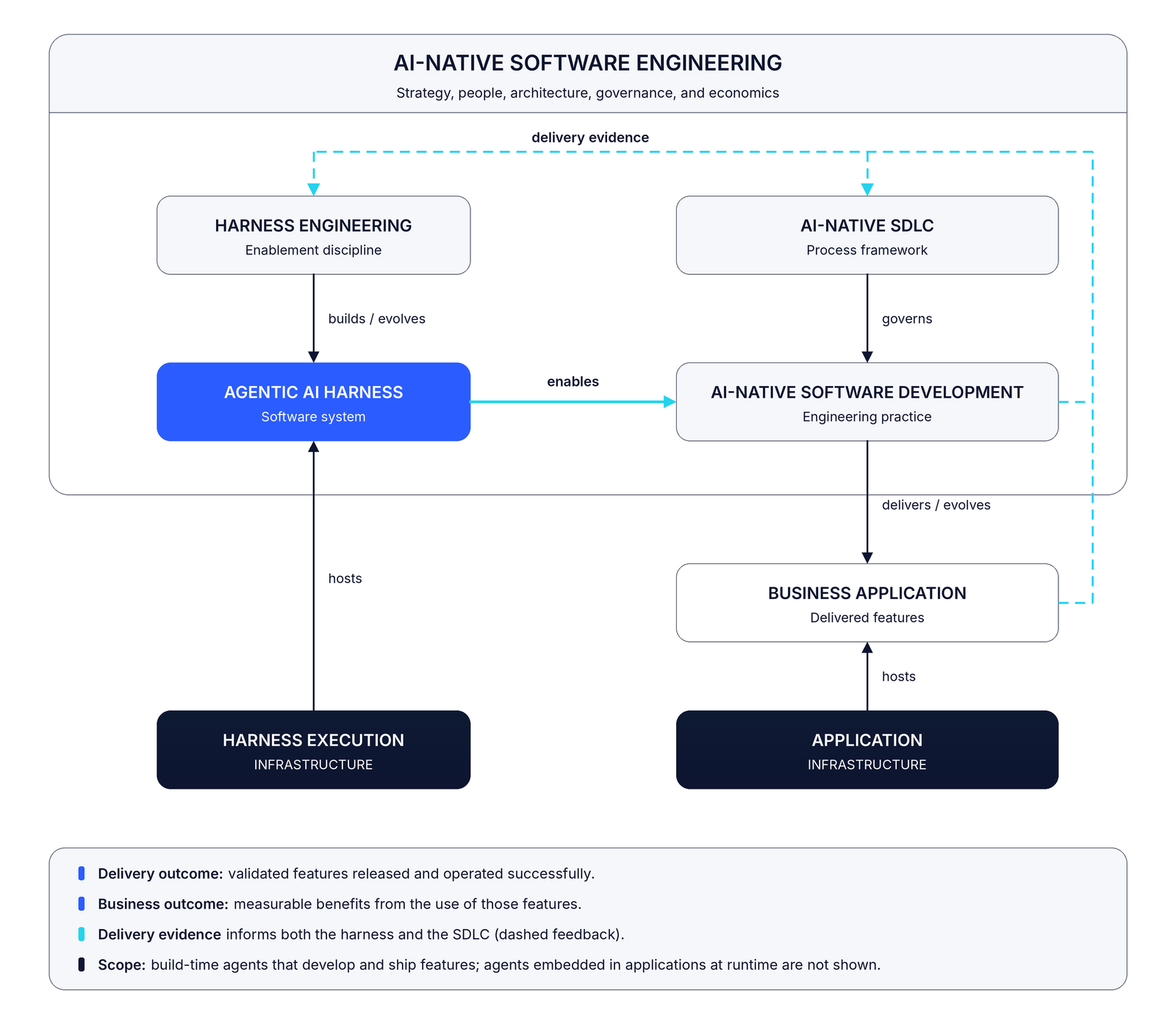
Figure 1. Relationships within AI-Native Software Engineering.
Two infrastructures appear in Figure 2.1, and they must remain separate. Harness execution infrastructure hosts the agents that build software. Application infrastructure hosts the software that agents build. An agent that develops a feature must not inherit the privileges of the environment where that feature runs (see Chapter 15).
A three-layer way to think about agent systems
A useful shorthand for the rest of the playbook separates three things that are often conflated:
| Layer | Question it answers | Examples |
|---|---|---|
| Model | What can the underlying LLM reason about and produce? | Frontier and open-weight models |
| Agent | How does a model loop over observations, tool calls, and actions toward a goal? | A coding agent session |
| Harness | What context, tools, permissions, state, checks, and feedback surround the agent so that its work is reliable and governable? | Instruction files, skills, tool gateways, sandboxes, hooks, verification integration, tracing |
Most delivery failures that look like "the model got it wrong" are really harness or lifecycle failures: missing context, unclear acceptance criteria, an unreachable test command, or no independent check. This is why the playbook concentrates on the system around the agent rather than on the agent alone.
Scope of this playbook
This playbook covers applying the harness to deliver business features. It does not cover training or selecting models, nor the internals of building a harness. Where harness capabilities matter to delivery (for example, tool permissions, hooks, or tracing), the playbook states the requirement and leaves the construction to the companion publication.
Key takeaways — Chapter 2
- Distinguish the harness (system), Harness Engineering (discipline), the AI-Native SDLC (process), and AI-Native Software Development (practice).
- Keep harness execution infrastructure separate from application infrastructure.
- Treat many apparent model errors as harness or lifecycle gaps.
Principles and Non-Negotiables
Core engineering principles
| Principle | Prescriptive guidance | Why it matters |
|---|---|---|
| Business intent before implementation | Establish why a feature is needed before deciding how to build it. | Agents optimize what they are told; wrong intent scales quickly. |
| Specification before execution | Define verifiable requirements, constraints, and acceptance criteria. | Ambiguity becomes plausible but wrong code. |
| Architecture before significant implementation | Settle boundaries and material design decisions first. | Structural mistakes are expensive to reverse. |
| Context before delegation | Give agents the relevant context for the task, and no more. | Missing context causes error; excess context dilutes attention and raises cost. |
| Bounded autonomy | Limit execution by scope, permission, risk, and budget. | Bounds contain the blast radius of mistakes. |
| Small, verifiable changes | Prefer incremental change sets. | Review and verification effort scales with change size. |
| Independent verification | Establish correctness evidence outside the implementing agent's control. | Agents can share the blind spots of their own tests. |
| Security by design | Integrate security and privacy throughout the lifecycle. | Retrofitting is slower and weaker. |
| Human accountability | Assign a named owner to each decision and outcome. | Accountability cannot be delegated to a model. |
| Evidence-driven completion | Define "done" through observable results, not agent assertions. | Agents may report success they have not achieved. |
| Production ownership | Extend responsibility past the pull request and the deployment. | Value arises only in production. |
| Continuous improvement | Turn recurring failures into improvements to harness, lifecycle, and practice. | Repeated manual correction does not compound. |
Engineering non-negotiables
An enterprise AI-native delivery practice should enforce the following. They are written as controls, not aspirations.
- No significant implementation without an agreed engineering objective.
- No delegation without explicit execution boundaries.
- No material architectural deviation without authorized review.
- No acceptance based solely on agent-generated assertions.
- No agent authority to modify authoritative verification criteria.
- No release without applicable security and quality gates.
- No direct production access merely because an agent has the tool capability.
- No feature completion without appropriate production validation.
- No productivity claims based solely on generated code volume.
- No uncontrolled modification of the harness or its governing policies.
These hold regardless of which models or agents the organization adopts. Chapter 15 describes how to enforce them mechanically.
Key takeaways — Chapter 3
- The principles share one logic: intent is explicit, autonomy is bounded, evidence is independent, and humans stay accountable.
- Non-negotiables must be enforced by tooling and policy, not by prompt wording.
The Human-Agent Operating Model
Layers of responsibility
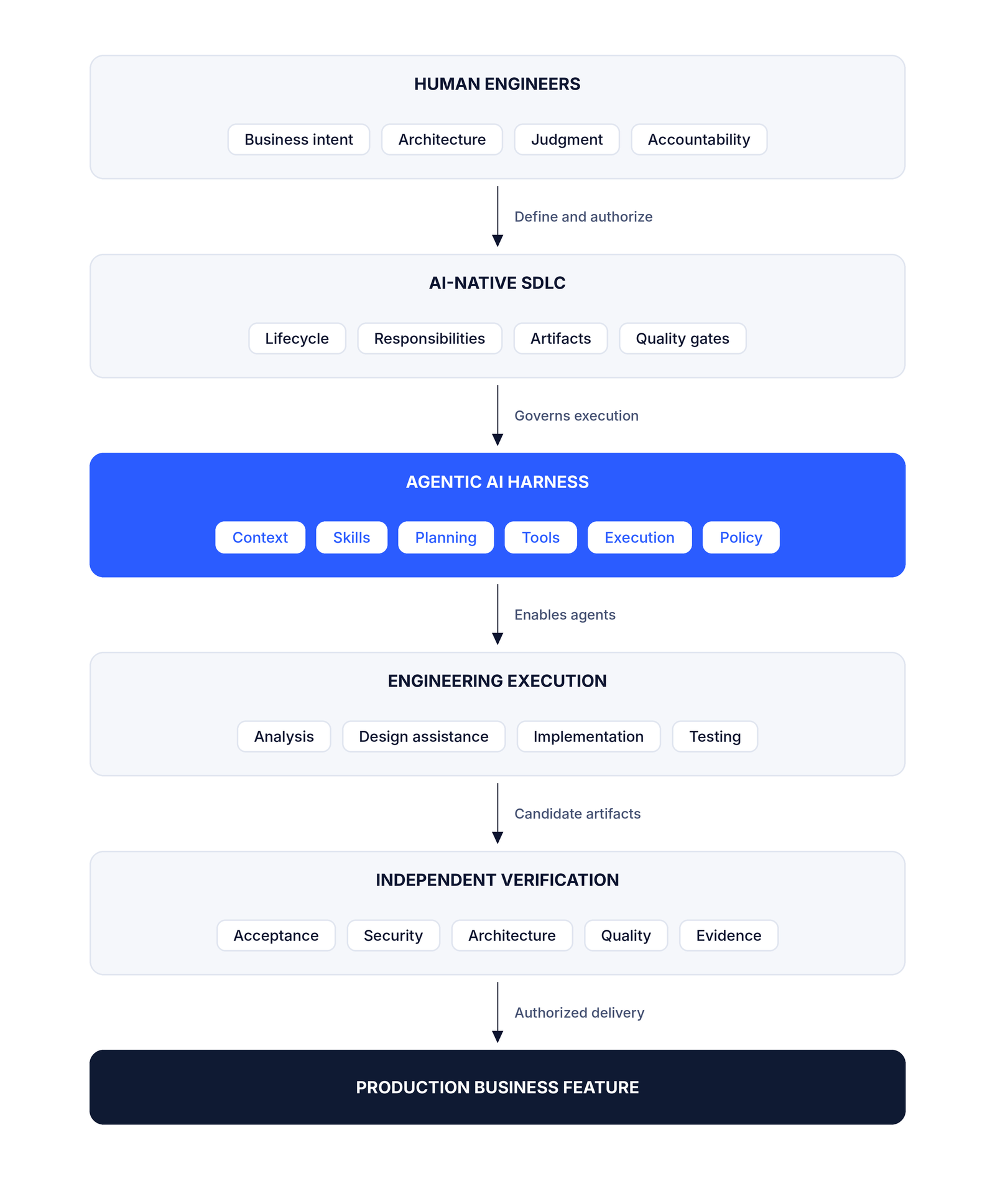
Figure 2. The human-agent collaborative operating model.
Responsibility allocation
| Activity | Human responsibility | Agent contribution | Harness responsibility |
|---|---|---|---|
| Business discovery | Set objectives and priorities | Analyze requirements; identify gaps | Provide approved business context |
| Specification | Approve requirements and acceptance criteria | Draft and refine specifications | Provide templates and knowledge |
| Architecture | Own material decisions | Analyze alternatives; propose designs | Supply architecture context and skills |
| Planning | Approve scope and strategy | Decompose tasks; analyze dependencies | Coordinate task execution |
| Development | Direct, supervise, and review | Generate and modify artifacts | Provide tools and controlled execution |
| Testing | Define verification coverage | Generate and run tests | Provide test environments and workflows |
| Verification | Own trusted acceptance criteria | Analyze findings; fix defects | Integrate independent verification |
| Security | Own requirements and risk decisions | Assist threat analysis and remediation | Enforce execution boundaries |
| Deployment | Authorize release per policy | Prepare deployment changes | Integrate governed CI/CD |
| Operations | Own production reliability | Assist diagnosis and remediation | Provide authorized operational capabilities |
Agents may perform substantial engineering work, but accountability is never transferred to the model.
Agent autonomy levels
Autonomy should be allocated deliberately and per task, not granted globally. The following proposed scale gives teams a shared vocabulary.
| Level | Name | Agent may | Typical control |
|---|---|---|---|
| A0 | Advisory | Suggest, analyze, and draft; takes no action | Human applies every change |
| A1 | Supervised action | Act in a sandbox; each consequential action approved | Per-action human approval |
| A2 | Contract-bound execution | Complete a defined task within an explicit contract | Scope, tool, and budget enforcement; review of the candidate change |
| A3 | Orchestrated delivery | Coordinate multiple tasks of one feature | Plan approval; independent verification at integration |
| A4 | Autonomous delivery | Deliver without per-change human review | Not recommended for production changes today; permitted, if at all, only for narrowly scoped, low-risk classes with proven controls |
Most enterprise feature work should operate at A2 or A3. The permitted level should decrease when a required control is missing (for example, no independent verification, or weak sandboxing), and increase only as evidence accumulates.
Delivery tracks: scaling ceremony to risk
Not every feature merits the same rigor. The playbook uses three delivery tracks to scale artifacts and gates. A feature's track is set by the feature owner and reviewed by architecture and security for Tracks B and C.
| Track | Typical features | Specification | Architecture | Verification | Release |
|---|---|---|---|---|---|
| A — Standard | Low-risk, well-understood changes within existing patterns | Concise spec and acceptance criteria | Existing patterns; ADR only if a decision is made | Automated tests and standard gates | Standard pipeline |
| B — Elevated | New capabilities, cross-service changes, customer-facing behavior | Full spec; traceability | Design review; ADRs; fitness functions | Independent acceptance, security, and resilience checks | Progressive rollout; production validation |
| C — High assurance | Authentication, authorization, tenant isolation, payments, regulated data, shared infrastructure | Full spec; threat model; explicit failure modes | Architecture board review | Independent verification plus human judgment; stronger evidence | Explicit approvals; staged rollout; rehearsed recovery |
TENANT-001, our running example, is a Track C feature because it creates tenant isolation boundaries and provisions shared infrastructure. Where later chapters give minimum requirements, they apply at Track B or C unless stated otherwise.
Key takeaways — Chapter 4
- Humans retain intent, architecture, judgment, and accountability; the harness enables; independent systems verify.
- Set agent autonomy per task using explicit levels, and lower it when controls are missing.
- Scale lifecycle rigor with delivery tracks so that low-risk work stays fast and high-risk work stays safe.
The AI-Native SDLC Reference Framework
Lifecycle overview
The proposed AI-Native SDLC has ten logical phases.
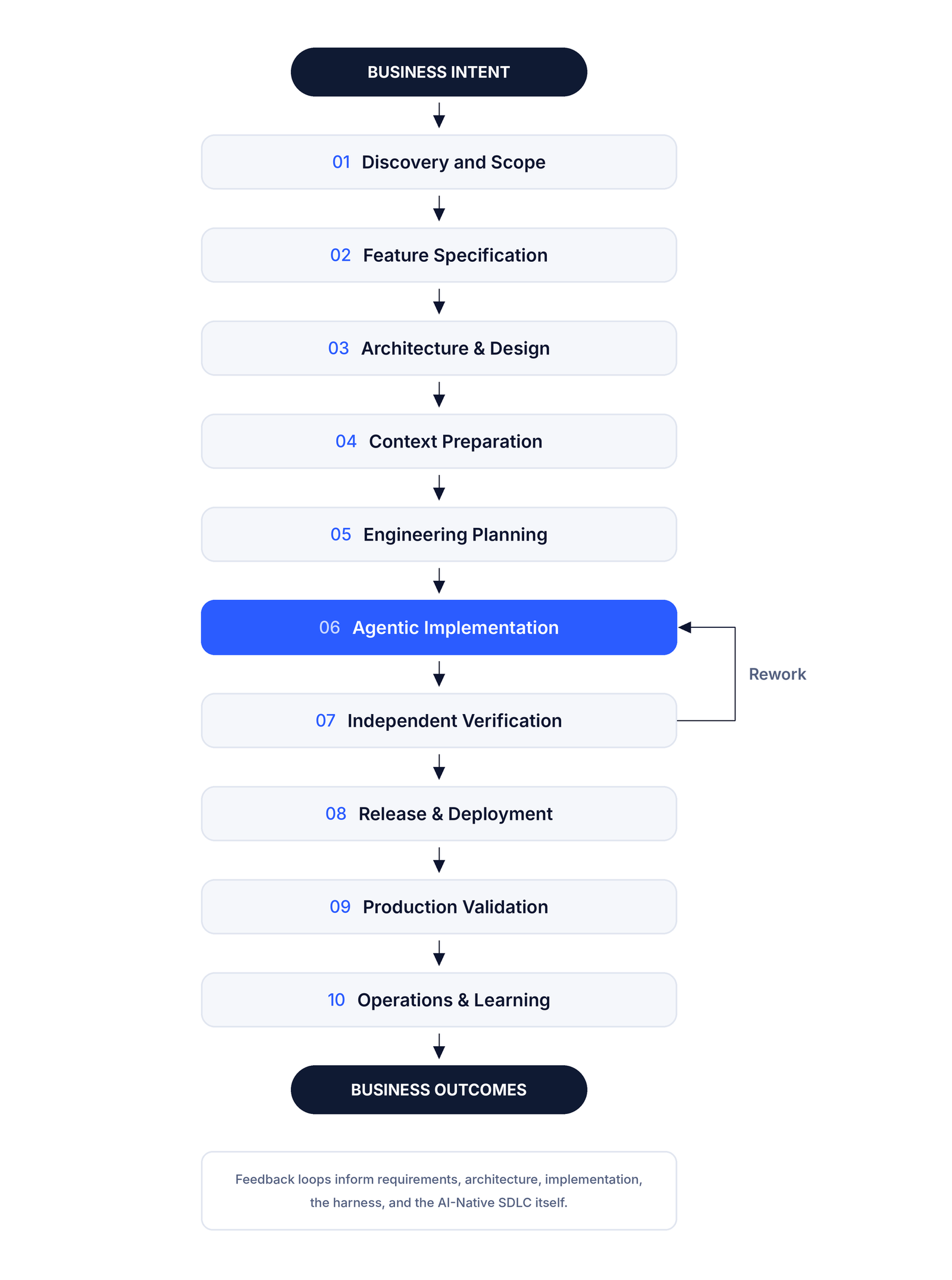
Figure 3. The reference AI-Native Software Development Lifecycle.
The phases describe engineering responsibilities, not a mandatory waterfall. Teams may run them iteratively and incrementally within Agile, Scrum, Kanban, or continuous-delivery models, and should prefer thin vertical slices (Chapter 20) so that each slice passes through all phases quickly.
Lifecycle artifacts and exit criteria
| Phase | Primary deliverable | Exit criterion |
|---|---|---|
| 1. Discovery and scope | Feature brief | Business objective and scope are agreed |
| 2. Feature specification | Verifiable specification | Requirements and acceptance criteria are clear enough to verify |
| 3. Architecture and design | Architecture decisions and design artifacts | Material technical decisions and constraints are established |
| 4. Context preparation | Task-specific context package | Relevant context is accessible, current, and authorized |
| 5. Engineering planning | Execution plan with task contracts | Tasks, dependencies, and boundaries are defined |
| 6. Agentic implementation | Candidate change set | Implementation is available for independent verification |
| 7. Independent verification | Verification evidence | Applicable acceptance and quality criteria are satisfied |
| 8. Release and deployment | Authorized release | Approved artifacts are deployed through governed mechanisms |
| 9. Production validation | Operational acceptance evidence | The feature behaves as intended in production |
| 10. Operations and learning | Operational insights and improvement backlog | Ownership, monitoring, and improvement are established |
Establishing Engineering Readiness
Before assigning feature work to agents, verify that the engineering environment can support reliable agentic execution. An agent cannot compensate for an undocumented, inconsistent, or hard-to-run codebase; it will amplify the inconsistency.
Repository readiness
A ready repository provides:
- Clear system and component boundaries.
- Discoverable architecture documentation.
- Reproducible, single-command build and test procedures.
- Explicit engineering conventions.
- Versioned dependencies and environment configuration.
- Meaningful, fast, deterministic test coverage.
- Traceable architecture decisions.
- Source-control protections for critical paths.
- Governed access to sensitive resources.
Make the repository agent-legible
A modern practice is to treat the repository as the agents' system of record: anything the agent cannot find in the repository (or in sources the harness exposes) effectively does not exist for it. Knowledge that lives only in chat threads, meetings, or people's heads should be captured in versioned artifacts.
Guidelines for instruction files such as AGENTS.md or CLAUDE.md:
- Keep them short and map-like. An instruction file should orient the agent and point to deeper material, not duplicate it. Long monolithic instruction files crowd out the task and rot quickly.
- Use progressive disclosure. Link to architecture notes, runbooks, and standards that the agent loads on demand, and load detailed skills only when relevant.
- State commands exactly. Give the build, test, lint, and run commands the agent should use.
- Prefer mechanical enforcement. Where a rule matters, encode it as a linter, type check, structural test, or hook rather than prose. A rule the agent can violate silently is only a suggestion.
- Version and review them. Instruction files are executable policy. Changes should be reviewed like code.
Recommended repository organization
business-application/
|-- AGENTS.md                # Short map for agents; links to detail
|-- CLAUDE.md                # Tool-specific variant if needed
|-- README.md
|-- docs/
|   |-- architecture/
|   |   |-- system-context.md
|   |   |-- component-model.md
|   |   +-- adr/
|   |-- domain/
|   |-- security/
|   |-- standards/
|   +-- runbooks/
|-- specifications/
|   +-- features/
|-- contracts/
|   |-- api/
|   +-- events/
|-- src/
|   |-- frontend/
|   |-- services/
|   +-- shared/
|-- tests/
|   |-- unit/
|   |-- integration/
|   |-- contract/
|   |-- acceptance/          # Protected paths (see Chapter 13)
|   +-- architecture/        # Fitness functions
|-- infrastructure/
|-- migrations/
|-- observability/
+-- ci/
Figure 4. An illustrative AI-ready application repository.
The objective is repository legibility, not conformance to a particular directory layout. Exact structure and instruction-file conventions depend on your tools and architecture.
Harness readiness assessment
| Capability | Readiness question |
|---|---|
| Context | Can agents discover the relevant architecture, requirements, and source? |
| Tools | Can agents invoke approved engineering tools with appropriate permissions? |
| Execution | Can tasks run in an isolated, reproducible workspace? |
| Verification | Are authoritative acceptance and quality gates enforced independently? |
| Continuity | Can interrupted tasks be resumed or safely terminated? |
| Governance | Are budgets, approvals, and authorization boundaries in place? |
| Observability | Can engineers inspect agent actions, tool calls, and failures? |
| Delivery integration | Can candidate changes enter established CI/CD workflows? |
If a critical capability is missing, reduce the permitted autonomy level (Section 4.3) until the control exists.
Key takeaways — Chapter 6
- Agent reliability depends heavily on repository legibility and runnable, deterministic checks.
- Keep instruction files short; use progressive disclosure; enforce important rules mechanically.
- Missing harness controls reduce the autonomy you may grant.
Phase 1 — Discovery and Scoping
Objective
Translate a business opportunity or requirement into a bounded engineering objective, understood in terms of its intended business outcome rather than its technical implementation.
Human responsibilities
The feature owner establishes:
- The business problem and target users.
- Expected behavior and the business value hypothesis.
- Feature scope and exclusions.
- Dependencies, constraints, and applicable regulatory and security requirements.
- The accountable delivery owner and the delivery track (Section 4.4).
Agent-assisted discovery
Through the harness, an agent may analyze existing requirements, find inconsistencies and ambiguities, explore repositories, investigate affected components, identify likely integration dependencies, draft clarification questions, and propose alternative scope boundaries.
The agent must not silently convert unresolved assumptions into approved requirements. Assumptions should be listed explicitly and assigned an owner for resolution.
The running example: Tenant onboarding
Consider a multi-tenant enterprise SaaS platform on AWS. Authorized administrators need to onboard a new tenant and provision the required application resources automatically.
| Feature dimension | Example |
|---|---|
| Feature ID | TENANT-001 |
| Feature name | Automated Tenant Onboarding |
| Delivery track | C — High assurance |
| Business problem | Tenant provisioning requires repetitive manual operations |
| Target users | SaaS platform administrators |
| Business objective | Reduce onboarding time and operational effort |
| Functional scope | Register, provision, activate, and track a tenant |
| Security constraint | Prevent unauthorized and cross-tenant access |
| Operational constraint | Recover safely from partial provisioning failures |
| Exclusions | Tenant billing, subscription changes, tenant offboarding |
Exit criteria
Discovery is complete when the business objective is understood, boundaries are explicit, material ambiguities are resolved or assigned, dependencies and risks are identified, and an accountable feature owner is named.
Phase 2 — Specification-Driven Development
Why specifications matter
An agentic system needs an explicit statement of the desired outcome. A conversational instruction such as "Build a tenant onboarding feature" does not establish authorization rules, API behavior, data-integrity requirements, failure handling, architectural constraints, or completion criteria. An agent will fill those gaps with plausible guesses.
Specification-driven development replaces guesses with a reviewed, verifiable contract.
Two clarifications prevent common misreadings:
- A specification is not big up-front design. It is a living artifact, versioned with the code, refined as slices are delivered, and sized to the feature's track.
- A specification is not a prompt. A prompt is an instruction to an agent run. A specification is the durable source of truth from which tasks, tests, and verification derive.
The feature specification contract
| Element | Required content |
|---|---|
| Feature identity | Identifier, title, owner, version, delivery track |
| Business intent | Problem, objective, expected value |
| Functional requirements | Observable system behavior |
| Acceptance criteria | Independently verifiable conditions |
| Non-functional requirements | Performance, availability, security, reliability |
| Architecture constraints | Required boundaries, patterns, technologies |
| Interface contracts | APIs, events, schemas, integration expectations |
| Data requirements | Ownership, classification, retention, consistency |
| Failure scenarios | Expected behavior under partial or complete failure |
| Out-of-scope items | Explicit exclusions |
| Dependencies | Required systems, services, decisions |
| Operational requirements | Monitoring, recovery, support |
| Release constraints | Deployment and rollout requirements |
| Open questions | Unresolved items with owners |
Writing good requirements
Write requirements that are atomic, unambiguous, testable, and traceable. Two structures help:
- Requirement phrasing. Use a consistent template such as "When [trigger], the system shall [response]" or "While [state], the system shall [behavior]". Avoid vague terms such as "fast", "secure", or "robust"; replace them with measurable thresholds.
- Acceptance criteria. Use observable Given / When / Then scenarios, including negative and failure cases, not only the happy path.
Illustrative feature specification
feature_id: TENANT-001
version: "1.0"
delivery_track: C
owner: feature-owner@example.com

objective: >
  Enable authorized administrators to provision enterprise SaaS tenants
  through a governed workflow.

scope:
  - Tenant registration
  - Asynchronous resource provisioning
  - Provisioning status tracking
  - Tenant activation
  - Failure recovery

functional_requirements:
  FR-01: When an authorized administrator submits a valid request, the system shall register a new tenant.
  FR-02: When a tenant is registered, the system shall start an asynchronous provisioning workflow.
  FR-03: The system shall expose the current provisioning status of a tenant to authorized callers.
  FR-04: The system shall activate a tenant only after all required provisioning steps succeed and validation passes.
  FR-05: When a provisioning step fails, the system shall record the failure and support safe recovery.

non_functional_requirements:
  NFR-01: Registration requests are acknowledged within a defined latency target (set during discovery).
  NFR-02: All lifecycle transitions produce audit events.
  NFR-03: Tenant data and resources are isolated; no cross-tenant access is permitted.

constraints:
  - Use the existing enterprise identity integration
  - Tenant-aware authorization on every operation
  - Idempotent provisioning operations
  - Approved AWS services only
  - Auditable lifecycle transitions

out_of_scope:
  - Tenant billing
  - Subscription management
  - Tenant offboarding

open_questions:
  - id: OQ-01
    question: Which failure classes are eligible for automatic retry?
    owner: solution-architect
Independently verifiable acceptance criteria
Criteria must be observable enough to support independent verification.
| ID | Scenario | Expected outcome | Requirement |
|---|---|---|---|
| AC-01 | An authorized administrator registers a valid tenant | A unique tenant record and provisioning ID are created | FR-01, FR-02 |
| AC-02 | An unauthorized user attempts registration | Request rejected; no resources created | FR-01, NFR-03 |
| AC-03 | A duplicate request with the same idempotency key is submitted | No duplicate provisioning occurs | FR-02 |
| AC-04 | All provisioning steps succeed | Tenant transitions to ACTIVE | FR-04 |
| AC-05 | A required step fails | Tenant stays non-active; failure recorded | FR-05 |
| AC-06 | Provisioning resumes after an eligible failure | Completed actions reconciled; only necessary work retried | FR-05 |
| AC-07 | A user requests another tenant's restricted information | Cross-tenant access rejected | NFR-03 |
| AC-08 | Provisioning status is queried | An authorized caller receives the persisted workflow status | FR-03 |
Every functional and non-functional requirement should map to at least one criterion, and every criterion to a requirement.
Acceptance criteria should be established or reviewed independently of implementation. The implementation agent may help draft them, but it must not hold authority to weaken them so that its own work passes.
Requirement-to-evidence traceability
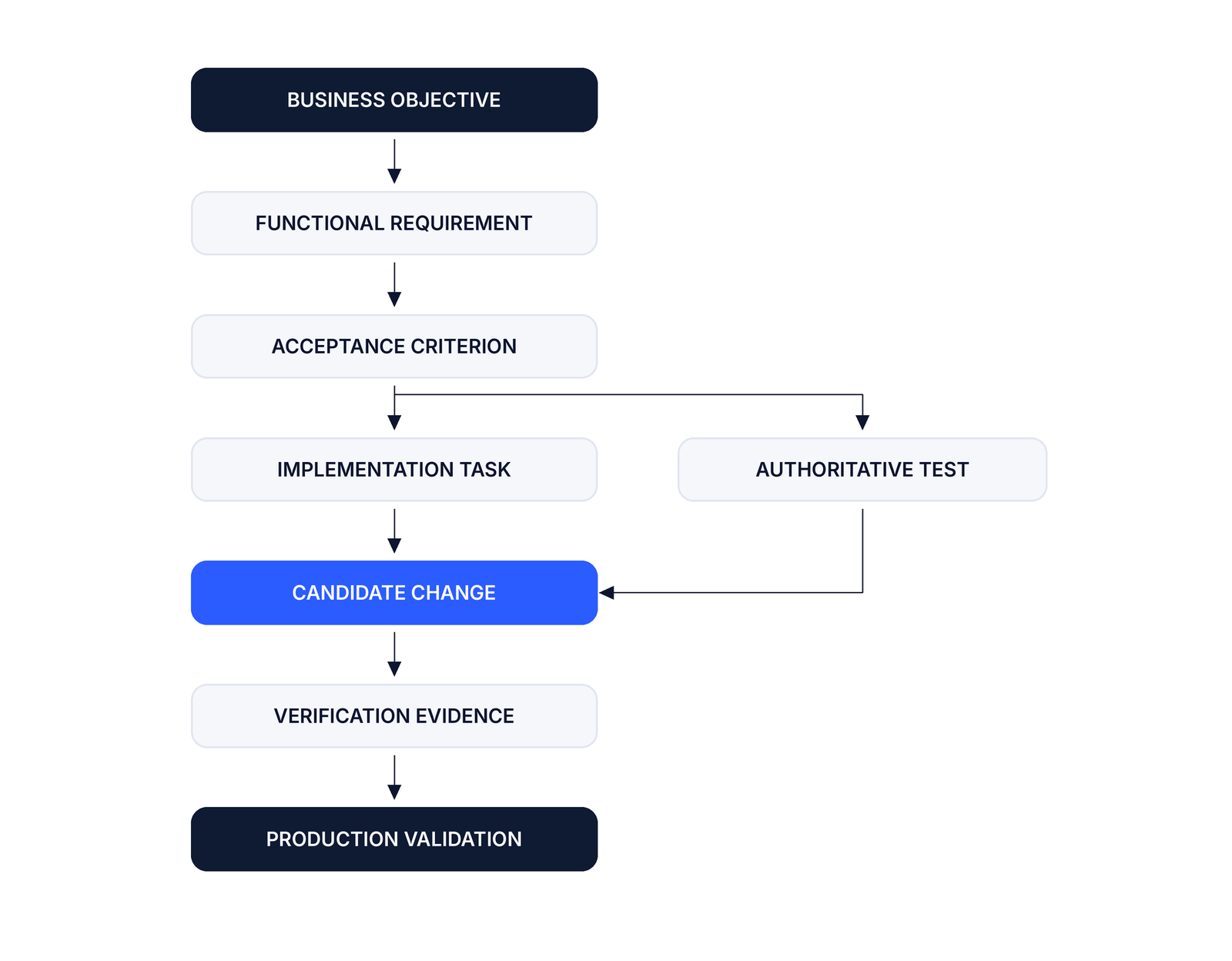
Figure 5. Traceability from business intent to independently verified outcomes.
Specification review checklist
Before approval, confirm that the specification:
- Contains no requirement that cannot be tested.
- Covers failure, abuse, and boundary cases, not just the happy path.
- States non-functional requirements as measurable thresholds.
- Lists exclusions and open questions with owners.
- Has been reviewed by someone other than the author (human or independent agent), then approved by the feature owner.
Key takeaways — Chapter 8
- A specification is a durable, verifiable contract, not a prompt and not big up-front design.
- Write atomic, testable requirements, including negative and failure scenarios.
- Keep requirement-to-criterion traceability two-way.
- Agents may draft criteria; they must not own or weaken them.
Phase 3 — Architecture and Design
Architecture remains human-accountable
Agents can assist with architectural analysis, alternative evaluation, dependency discovery, and design generation. Material architectural decisions, however, remain the responsibility of authorized engineers and architects. The depth of design should be proportional to the feature's complexity and risk (its delivery track).
Architectural activities
The team should establish:
- Current-state architecture.
- Affected systems and bounded contexts.
- Target-state architecture.
- Integration boundaries and interfaces.
- Data ownership and consistency requirements.
- Security and trust boundaries.
- Failure-handling and recovery mechanisms.
- Relevant quality attributes.
- Deployment and migration strategy.
- Material decisions and their trade-offs.
Agent-assisted architecture workflow
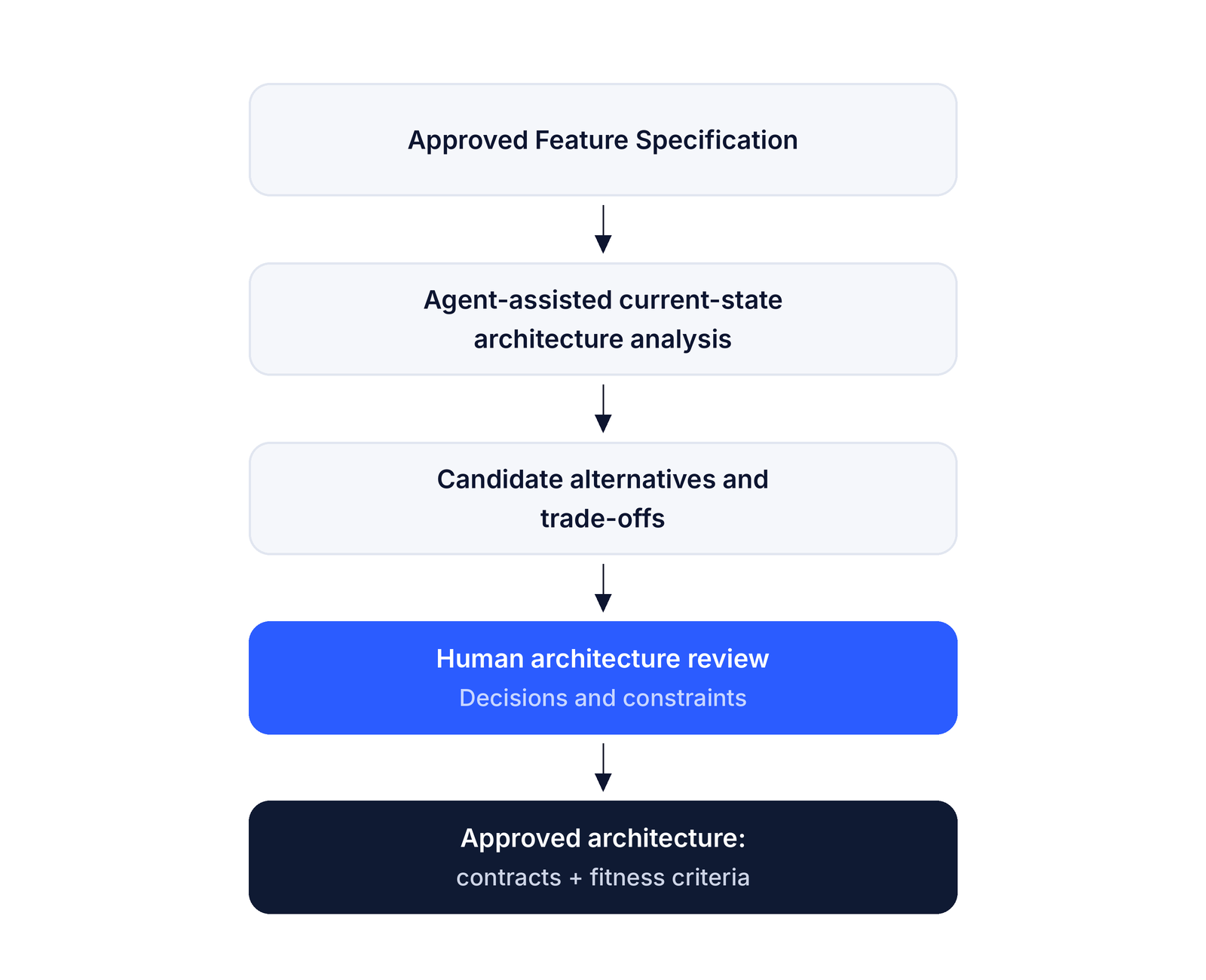
Figure 6. Governed, agent-assisted architecture design.
Example target architecture: tenant onboarding
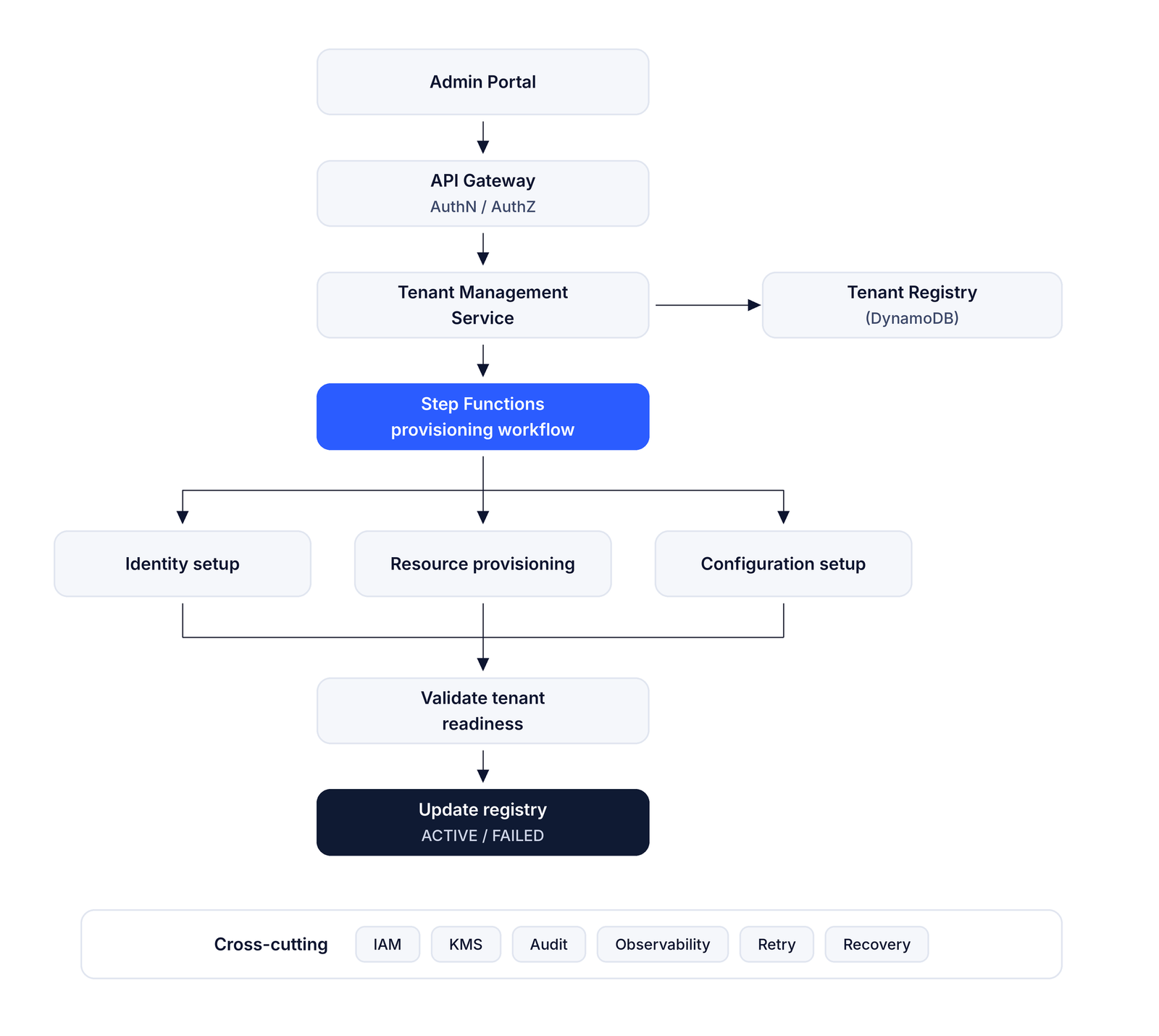
Figure 7. An illustrative AWS target architecture for automated tenant onboarding.
Architecture decision records
| ADR | Decision | Rationale |
|---|---|---|
| ADR-001 | Provision asynchronously | Provisioning may exceed synchronous API expectations |
| ADR-002 | Maintain durable tenant lifecycle state | Enables status tracking and failure recovery |
| ADR-003 | Require idempotent provisioning actions | Prevents duplication during retries and recovery |
| ADR-004 | Enforce tenant-aware authorization | Protects restricted tenant resources |
| ADR-005 | Use a governed workflow orchestrator | Supports explicit transitions and recovery logic |
Each ADR should record context, alternatives considered, the decision, consequences, and constraints. Agents may draft ADRs; authorized humans approve them.
Architecture as executable constraints
Important decisions should become verifiable mechanisms, often called architecture fitness functions. This turns architecture from advice into a check that agents cannot silently ignore.
| Architectural decision | Verification mechanism |
|---|---|
| Tenant isolation | Negative cross-tenant authorization tests |
| API compatibility | API contract tests |
| Idempotency | Duplicate-request and retry tests |
| Controlled provisioning | Workflow state-transition tests |
| Least privilege | Infrastructure policy validation |
| Layering and dependency rules | Structural tests; dependency linting |
| Operational visibility | Telemetry and audit-event verification |
Key takeaways — Chapter 9
- Humans own material architectural decisions; agents analyze and draft.
- Record decisions as ADRs and encode the important ones as fitness functions.
- Calibrate design depth to the delivery track.
Phase 4 — Context Preparation
Why context preparation matters
A good specification is necessary but insufficient. Agents also need relevant knowledge of the existing system, approved architecture, coding conventions, integration boundaries, test infrastructure, and operational expectations. Context engineering is the practice of assembling the smallest set of high-signal information that lets an agent complete a task correctly.
Two failure modes are common:
- Under-supply. The agent rediscovers or guesses essential knowledge, and guesses wrong.
- Over-supply. Loading an entire repository or document set dilutes relevant information, raises cost and latency, and can reduce accuracy as the working context grows noisy.
Context techniques
| Technique | Purpose |
|---|---|
| Task-specific context packages | Give each task only the specification sections, ADRs, contracts, and code it needs |
| Progressive disclosure | Start with a map; load detail on demand |
| Just-in-time retrieval | Fetch files and documents when needed rather than preloading everything |
| Skills | Package reusable procedures and standards that load only when relevant |
| Sub-agents for isolation | Delegate exploratory or noisy work to a separate context and return a concise summary |
| Compaction and notes | Summarize long sessions and persist decisions to external notes so progress survives context limits |
| Trust labeling | Distinguish trusted instructions from untrusted retrieved content |
The feature execution context package
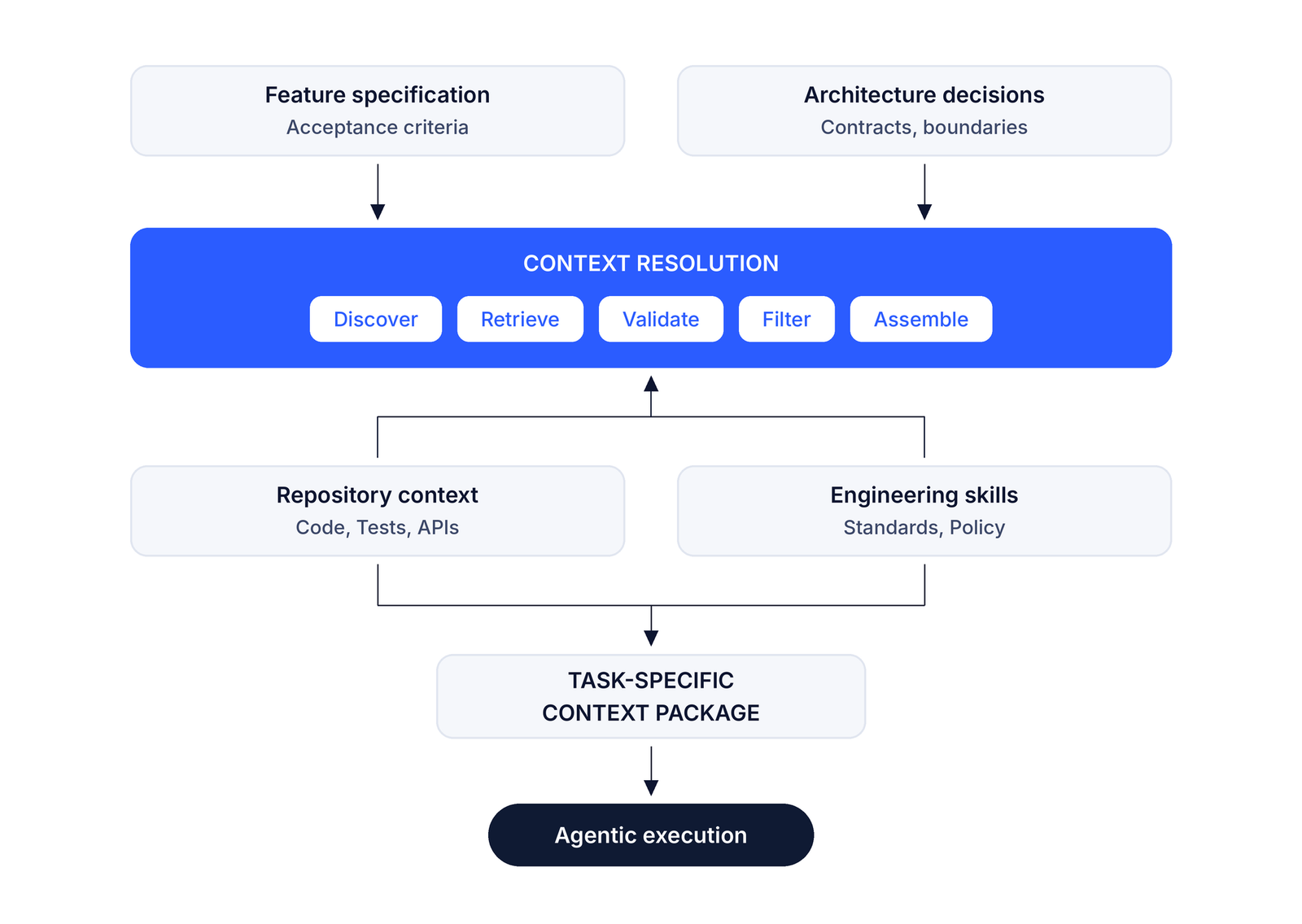
Figure 8. Task-specific context preparation.
Context for the running example
| Context category | Required information |
|---|---|
| Business | Tenant lifecycle and administrator responsibilities |
| Domain | Tenant identifiers, states, provisioning semantics |
| Architecture | SaaS control plane, tenant registry, integration boundaries |
| Repository | Existing tenant management service and test suites |
| Interface | API and event contracts |
| Security | Tenant-aware authorization and IAM policies |
| Infrastructure | Approved AWS architecture and deployment configuration |
| Testing | Acceptance criteria and verification requirements |
| Operational | Existing monitoring, logging, and recovery practices |
Context validation
Before significant execution, verify that:
- Authoritative sources are identifiable and current.
- Required documents are accessible to the agent's identity.
- Conflicting instructions are resolved.
- Sensitive information is protected.
- Retrieved content cannot override trusted execution policy.
- Relevant architecture and acceptance constraints are present.
Key takeaways — Chapter 10
- Assemble the smallest sufficient, high-signal context for each task.
- Use progressive disclosure, skills, sub-agents, and external notes to manage context limits.
- Treat retrieved content as data, never as policy.
Phase 5 — Decomposition and Planning
Decompose features into bounded work
Delegate tasks that have explicit objectives, dependencies, expected artifacts, and verification requirements. A task should be large enough to deliver meaningful value but small enough to be understood and verified in one review.
Example decomposition
| Task ID | Engineering task | Depends on |
|---|---|---|
| T01 | Define tenant lifecycle model and contracts | Approved architecture |
| T02 | Implement tenant registry persistence | T01 |
| T03 | Implement tenant registration API | T01, T02 |
| T04 | Implement provisioning workflow | T01 |
| T05 | Implement provisioning status API | T02 |
| T06 | Implement tenant authorization controls | T01 |
| T07 | Implement administrator user interface | API contracts |
| T08 | Implement infrastructure as code | Approved architecture |
| T09 | Integrate telemetry and audit events | Relevant components |
| T10 | Run integration and acceptance verification | T02–T09 |
| T11 | Prepare deployment and recovery artifacts | T10 |
Task dependency graph
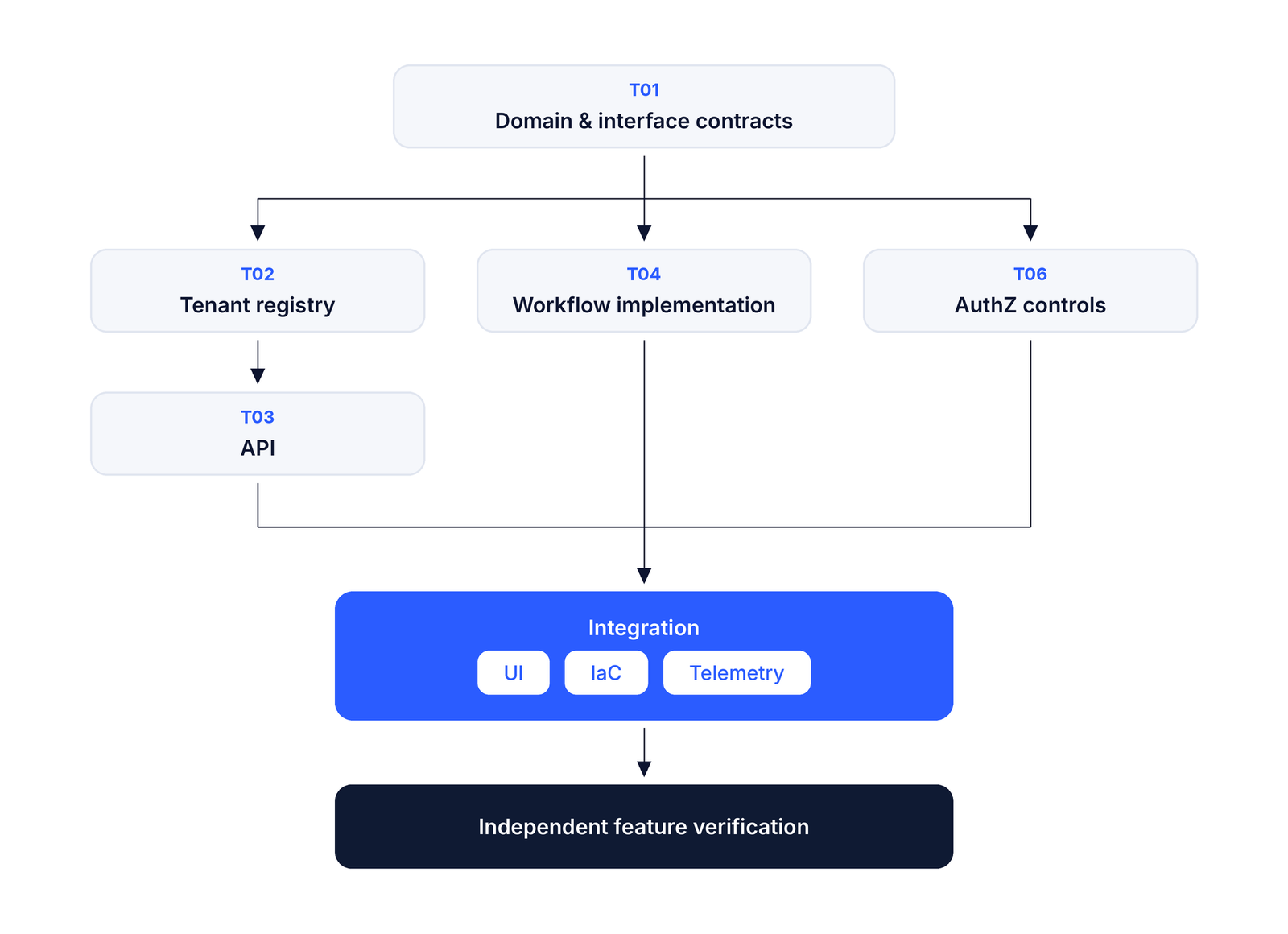
Figure 9. A representative feature task graph.
Sequence work as vertical slices
Where possible, slice the feature so that each increment is integrated and verifiable end to end (for example, "register a tenant and persist it" before "provision resources"), rather than completing every layer horizontally and integrating at the end. See Section Design Patterns for AI-Native Feature Delivery.
Task execution contracts
Every delegated task carries an explicit execution contract.
task_id: TENANT-001-T04
feature_id: TENANT-001
autonomy_level: A2

objective: >
  Implement asynchronous tenant provisioning and safe recovery
  from partial failures.

inputs:
  specification: TENANT-001-v1.0
  architecture: [ADR-001, ADR-002, ADR-003, ADR-005]
  acceptance_criteria: [AC-03, AC-04, AC-05, AC-06]

allowed_scope:
  - services/tenant-provisioning/
  - infrastructure/provisioning/
  - tests/unit/provisioning/

prohibited_actions:
  - Direct production deployment
  - Protected branch modification
  - Unapproved architecture changes
  - Modification of protected acceptance tests

expected_artifacts:
  - Provisioning workflow implementation
  - Infrastructure changes
  - Unit tests
  - Implementation summary (assumptions, risks, deviations)

verification:
  - Workflow state-transition tests
  - Idempotency tests
  - Partial-failure recovery tests

execution_policy:
  workspace: isolated
  budget_profile: standard-feature-task
  approval_profile: governed-implementation
  escalate_on: [ambiguous-requirement, architecture-deviation, security-boundary]
The contract must be enforced by the harness through scoped permissions, path protections, tool allow-lists, and budgets. Restrictions that exist only in natural-language instructions are not controls.
Selecting an execution topology
| Topology | Appropriate when |
|---|---|
| Single agent | Bounded work with limited dependencies |
| Sequential execution | Work requires ordered steps |
| Parallel workers | Independent components with stable interface contracts |
| Orchestrator–worker | Complex work needing specialized coordination |
| Human-agent workflow | Material ambiguity, architectural decisions, or elevated risk |
Prefer the simplest topology that reliably meets the need. Multi-agent designs add coordination cost, correlated failure modes, and complexity; adopt them for demonstrated benefit, not by default.
Key takeaways — Chapter 11
- Delegate bounded tasks with explicit execution contracts.
- Enforce contracts through harness controls, not prose.
- Slice vertically and prefer the simplest execution topology.
12. Phase 6 — Agentic Implementation
12.1 The implementation loop
Agentic implementation is a controlled cycle of inspection, planning, change, test, observation, and correction.
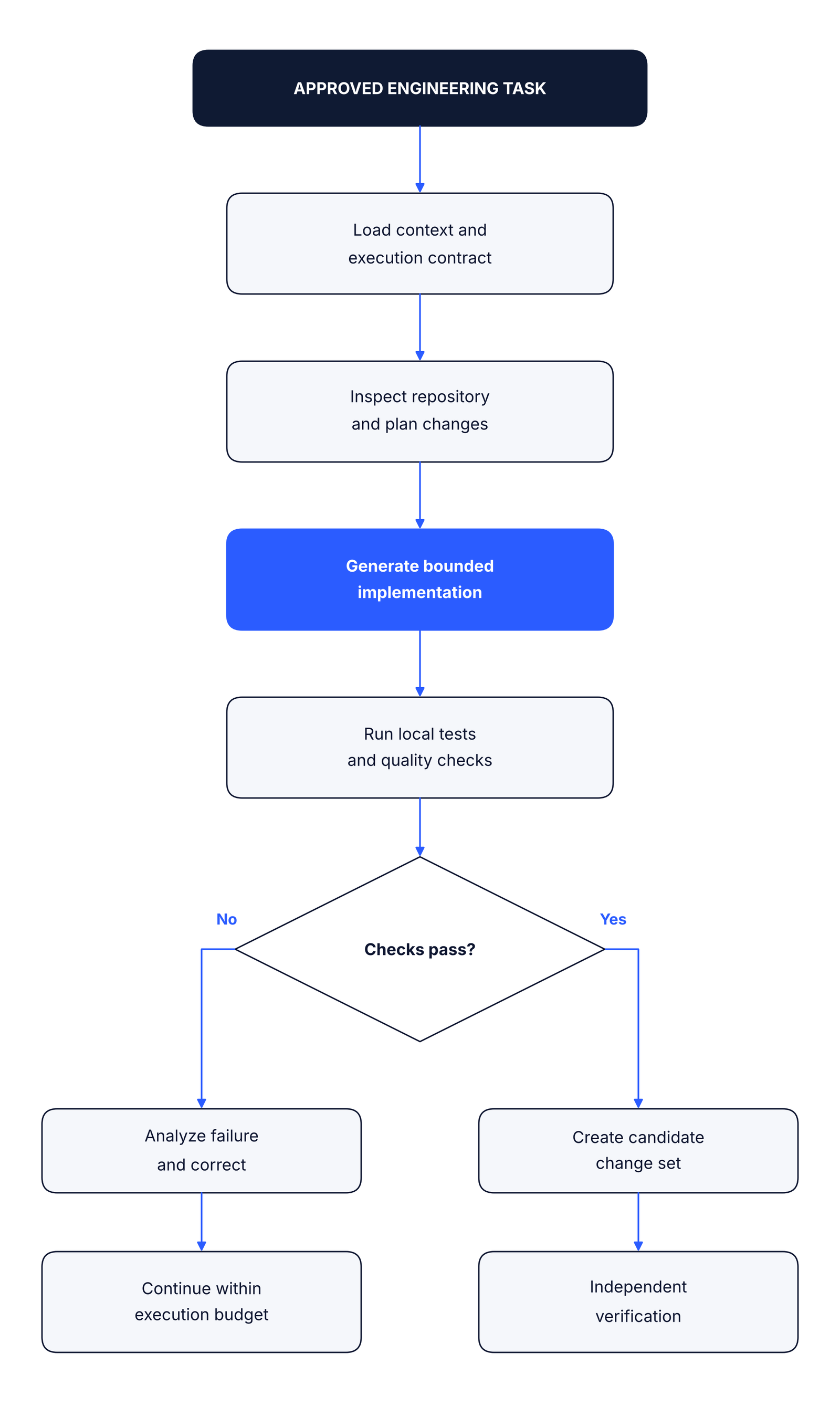
Figure 10. The controlled agentic implementation loop.
12.2 Prescriptive execution sequence
Direct the harness to:
- Load the approved task and its execution boundaries.
- Inspect the existing implementation and related contracts.
- Establish the current build and test baseline.
- Identify the minimum coherent change required.
- Generate the implementation.
- Add or update implementation-level tests.
- Run local checks (build, lint, type check, tests).
- Analyze failures and apply bounded corrections.
- Record completed work, assumptions, deviations, and unresolved concerns.
- Persist the candidate change set for independent review.
Establish a clean baseline first. Otherwise pre-existing failures may be misattributed to the new change.
12.3 Example implementation instruction
OBJECTIVE
Implement the tenant provisioning workflow defined by TENANT-001-T04.

AUTHORITATIVE INPUTS
- Approved specification TENANT-001-v1.0
- ADR-001, ADR-002, ADR-003, ADR-005
- Existing tenant lifecycle contracts
- Repository engineering standards

REQUIRED BEHAVIOR
- Execute provisioning asynchronously.
- Persist lifecycle transitions.
- Support safe recovery from partial failures.
- Reconcile completed actions before retrying.
- Activate a tenant only after required validation.

CONSTRAINTS
- Remain within the approved task scope.
- Preserve public contracts unless changes are authorized.
- Do not modify protected acceptance criteria or tests.
- Do not deploy to production.
- Escalate material architectural ambiguity instead of guessing.

EXPECTED OUTPUTS
- Implementation changes and relevant unit tests
- Local verification results
- Identified risks, assumptions, and deviations
- Candidate change summary
This instruction is the interface to an agent run. The governance lives in the contract, the harness controls, and the verification pipeline.
Deterministic guardrails alongside agent judgment
Agents are probabilistic; some controls must not be. Use the harness to attach deterministic checks at well-defined points in the loop, for example:
- Before a tool call: block writes outside allowed paths, deny disallowed commands, and validate parameters.
- After a file edit: run formatters, linters, and fast structural tests, and return failures to the agent as feedback.
- Before completion: require that build and tests pass and that the candidate change summary is present.
Such hooks give the agent immediate, machine-readable feedback and keep policy enforcement out of the model's discretion. Error messages from these checks should explain how to fix the violation, since the agent will consume them directly.
Implementation across architectural layers
| Layer | Agentic activities |
|---|---|
| Frontend | UI components, interaction logic, validation, API integration |
| Application services | Business logic, use cases, orchestration, authorization |
| Domain | Entities, lifecycle rules, invariants |
| Integration | API clients, event producers and consumers, adapters |
| Data | Persistence, schema changes, migrations, queries |
| Infrastructure | Infrastructure-as-code changes and configuration |
| Security | Authorization checks and approved controls |
| Observability | Logs, metrics, traces, audit events |
Cross-layer work must preserve approved architectural boundaries.
Long-running execution and checkpoints
Complex tasks outlast a single context window. Persist meaningful state outside the model's context.
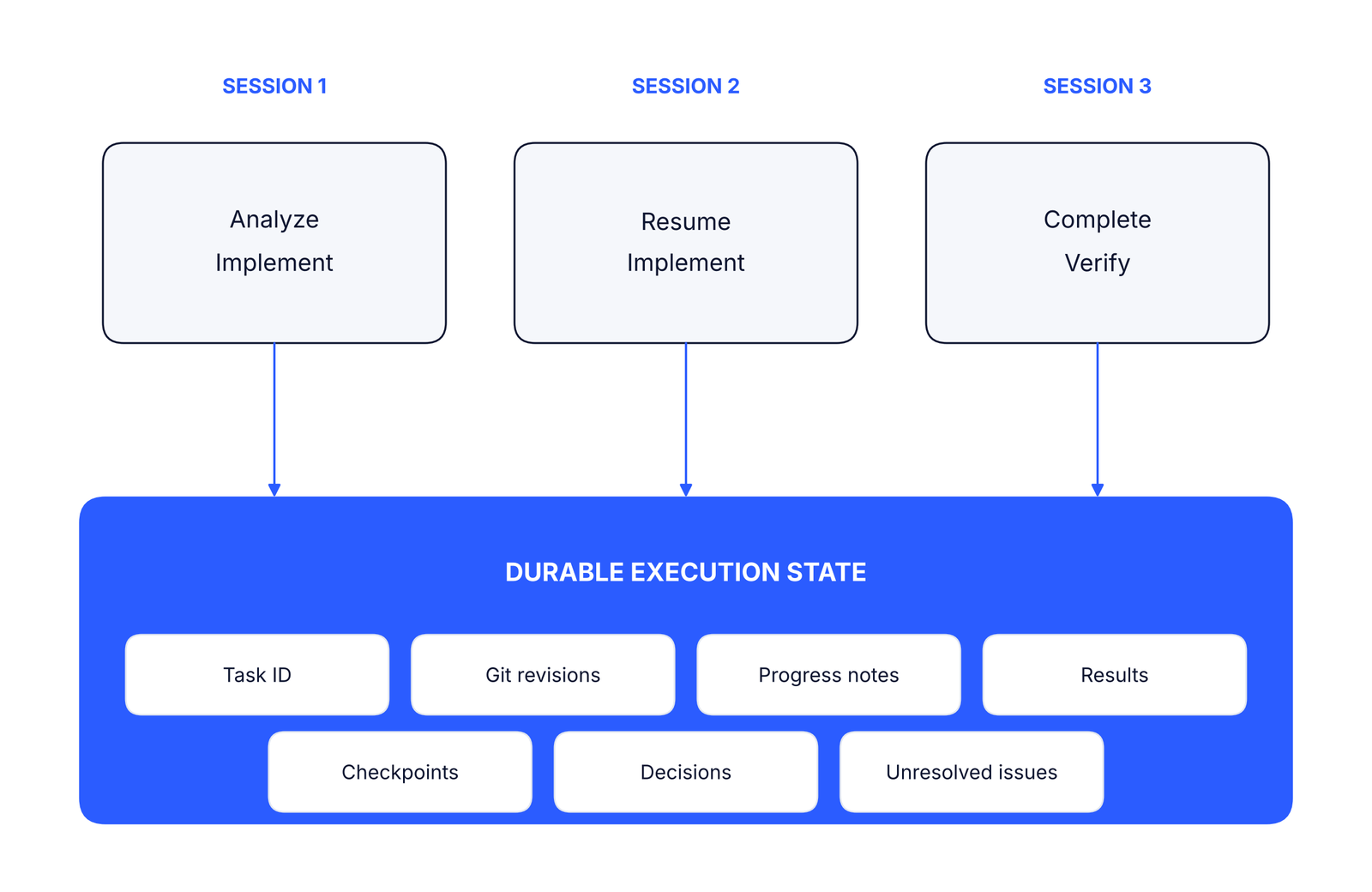
Figure 11. Incremental execution across agent sessions.
Practical techniques:
- Keep a structured, machine-readable progress record and a human-readable progress note in the workspace.
- Commit at coherent checkpoints with descriptive messages so state is recoverable.
- Maintain a feature checklist whose items an agent may mark complete only when verified.
- Give each new session a short startup routine: read the progress note and recent commits, confirm the baseline, then choose the next item.
A resumed session must revalidate repository state, task scope, permissions, and verification criteria. It must not blindly repeat actions whose outcome is uncertain.
Managing parallel execution
Parallel agents help when tasks are genuinely independent, but they add risks.
| Risk | Mitigation |
|---|---|
| Conflicting source changes | Isolated branches or worktrees |
| Inconsistent API assumptions | Versioned, approved interface contracts |
| Duplicate implementations | Explicit task ownership |
| Architectural divergence | Shared approved architecture context |
| Integration failures | Controlled integration and regression testing |
| Excess cost | Budgets and concurrency limits |
Do not parallelize tightly coupled work merely to raise agent utilization.
Key takeaways — Chapter 12
- Run implementation as a bounded loop with a clean baseline and recorded assumptions.
- Attach deterministic hooks and checks for policy that must not depend on model judgment.
- Persist state outside the context window, and revalidate on resume.
- Parallelize only independent work behind stable contracts.
Phase 7 — Independent Verification
Testing is not independent verification
An implementation agent can write tests that reflect its own understanding of the requirements. If that understanding is wrong, the implementation and its tests will be wrong in the same way, and every check will pass. Passing agent-written tests therefore does not establish feature correctness.
Agents can also game checks: special-casing tests, weakening assertions, deleting failing tests, or declaring success prematurely. This is not malice; it is optimization against the signal the agent can see. The defense is structural, not exhortation.
Separating implementation from verification
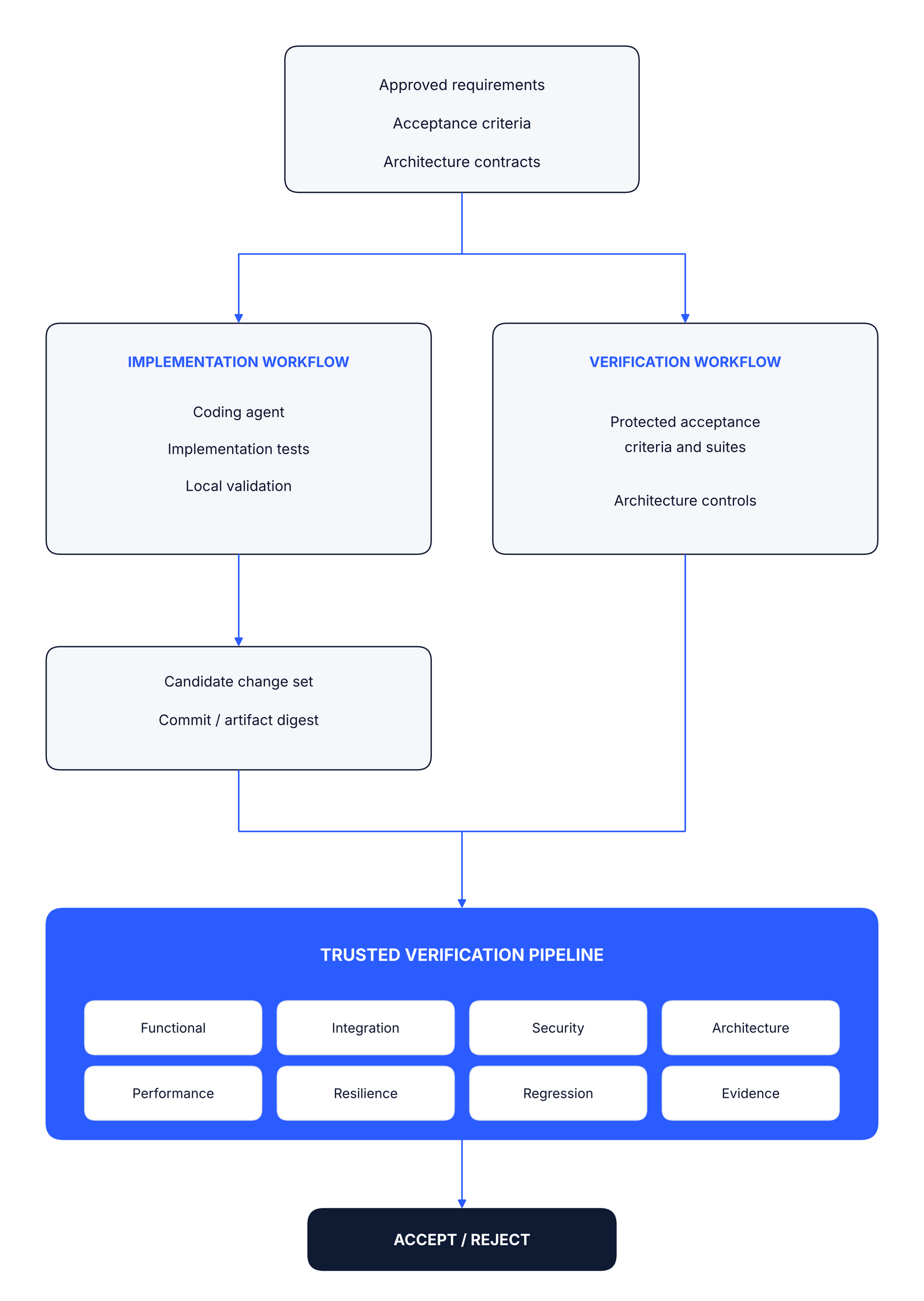
Figure 12. Independent feature verification architecture.
13.3 Verification dimensions
| Dimension | Purpose |
|---|---|
| Build verification | The candidate builds successfully |
| Unit testing | Individual behaviors are correct |
| Integration testing | Component interactions work |
| Contract testing | Interfaces are compatible |
| End-to-end testing | Complete user journeys work |
| Acceptance testing | Original requirements are met |
| Security testing | Security defects and policy violations are found |
| Architecture fitness | Architectural constraints hold |
| Performance testing | Latency and throughput meet expectations |
| Resilience testing | Failure handling and recovery work |
| Accessibility testing | Applicable accessibility requirements are met |
| Production validation | Behavior is correct after deployment (Chapter 17) |
Example verification matrix
| Acceptance criterion | Mechanism | Expected evidence |
|---|---|---|
| AC-01 Registration | API integration test | Unique tenant record and provisioning ID |
| AC-02 Unauthorized registration | Negative authorization test | Rejection; no resource creation |
| AC-03 Duplicate request | Idempotency test | Single logical provisioning operation |
| AC-04 Successful provisioning | End-to-end workflow test | ACTIVE tenant and required resources |
| AC-05 Partial failure | Failure-injection test | Non-active status; recorded failure |
| AC-06 Recovery | Checkpoint and retry test | Reconciled state; successful recovery |
| AC-07 Tenant isolation | Cross-tenant security test | Unauthorized access denied |
| AC-08 Status tracking | API contract and integration test | Correct persisted workflow status |
Protecting verification from the implementer
Concrete controls that make verification independent:
- Protected paths. Authoritative acceptance tests and fitness functions live under paths that implementation agent identities cannot modify, enforced by code-owner rules, branch protection, or a separate repository.
- Trusted execution. Verification runs in CI that the implementing agent cannot reconfigure, using the pipeline definition from the protected branch rather than from the candidate.
- Change detection. Flag candidate changes that delete tests, weaken assertions, add skips, or alter thresholds, and route them to human review.
- Test-quality signals. Where practical, use mutation testing or fault-injection to check that tests would actually fail when behavior is wrong.
- Flaky-test discipline. Quarantine and fix nondeterministic tests; a flaky suite teaches agents (and people) to ignore failures.
- Evidence binding. Tie results to the exact commit and artifact digest being released.
Architecture fitness functions in verification
For the running example, applicable checks include:
- Tenant boundaries are enforced.
- Forbidden dependencies are rejected.
- API contracts remain compatible.
- Workflow state transitions are valid.
- Sensitive information is not exposed.
- Infrastructure satisfies approved security policy.
- Required operational telemetry exists.
Inform the implementation agent of these constraints, but keep the authoritative mechanisms protected.
What "independent" does and does not mean
A second reviewer agent is useful but does not automatically provide independence. If both agents share a model, context, assumptions, and permissions, their failure modes are correlated. Trustworthy verification combines:
- Approved acceptance criteria.
- Protected test definitions.
- Independently controlled execution environments.
- Deterministic validation where possible.
- Authorized human judgment for subjective or non-deterministic requirements.
- Evidence bound to exact revisions and artifacts.
An agent-based evaluator can add value, particularly for judgment-heavy criteria such as usability or design adherence, provided it is given concrete criteria, is calibrated against human judgment, and does not share the implementer's permissions or write access.
Verifying the harness is not verifying the feature
Do not conflate two kinds of evaluation:
- Feature verification asks whether this candidate change satisfies this feature's criteria.
- Harness evaluation asks whether the harness reliably completes a representative suite of tasks across repeated runs, and whether changes to prompts, skills, tools, or models improve or regress that reliability.
Because agent behavior varies between runs, harness evaluation should examine results over multiple runs and look at consistency, not only best-case success. Harness evaluation belongs to Harness Engineering (see the companion publication); this playbook consumes its results as an input to autonomy decisions.
The verification feedback loop
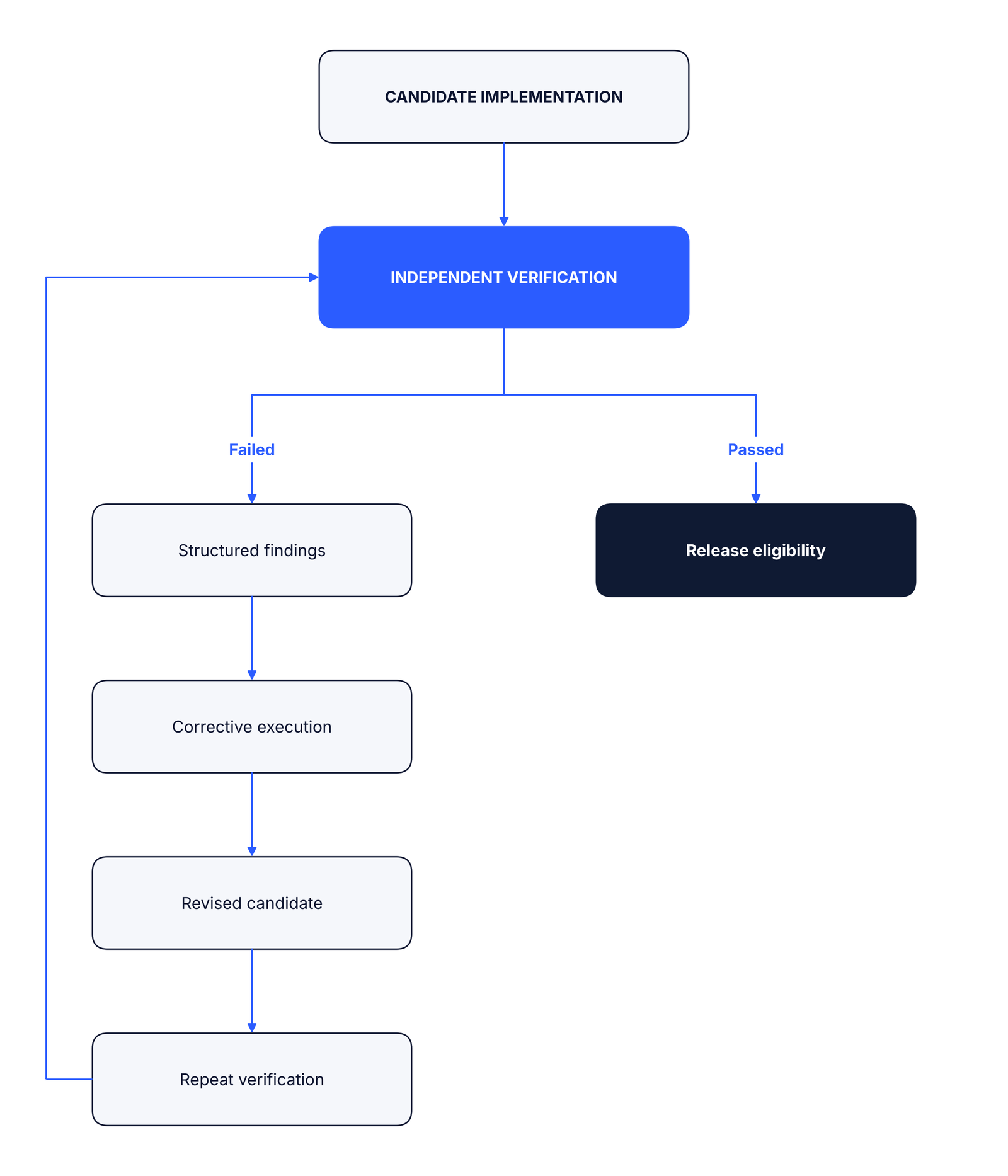
Figure 13. A bounded implementation–verification loop.
When failures recur, investigate the underlying cause instead of repeatedly telling the agent to try again. Escalate when:
- Requirements remain ambiguous.
- The architectural approach is unsuitable.
- Verification criteria conflict.
- Budgets are exhausted or progress has stalled.
- A security boundary would need to change.
Key takeaways — Chapter 13
- Agent-written tests do not establish correctness; agents can also game visible checks.
- Protect authoritative tests, run them in trusted CI, detect test tampering, and bind evidence to the release candidate.
- A second agent is not automatically independent.
- Feature verification and harness evaluation answer different questions.
Engineering Review and Quality Governance
Review in AI-native engineering
As implementation throughput rises, review quality becomes critical. AI-generated code can be syntactically clean while hiding architectural flaws, security problems, unnecessary complexity, or incorrect business semantics. The purpose of review is not to confirm the code looks plausible; it is to decide whether the change is an acceptable engineering solution.
Review dimensions
| Area | Questions to answer |
|---|---|
| Functional correctness | Does it satisfy the original business requirements? |
| Architecture | Does it respect boundaries and approved decisions? |
| Simplicity | Is it more complex than necessary? |
| Maintainability | Can future engineers understand and evolve it? |
| Security | Does it introduce exploitable behavior or inappropriate access? |
| Performance | Are there avoidable resource or latency problems? |
| Reliability | Does it handle expected failure scenarios? |
| Compatibility | Does it preserve required contracts? |
| Testing | Are important behaviors and edge cases verified, and were tests altered? |
| Operations | Can it be monitored, diagnosed, and recovered? |
The pull request evidence contract
A pull request should contain enough evidence to support review without forcing the reviewer to reconstruct intent.
FEATURE IDENTIFIER
BUSINESS OBJECTIVE
REQUIREMENTS AND ACCEPTANCE CRITERIA ADDRESSED
ARCHITECTURAL DECISIONS APPLIED
IMPLEMENTATION SUMMARY
AFFECTED COMPONENTS
API AND DATA CONTRACT CHANGES
TEST AND VERIFICATION RESULTS (bound to this commit)
CHANGES TO TESTS OR VERIFICATION CONFIGURATION (explicitly listed)
SECURITY AND ARCHITECTURE FINDINGS
MIGRATION AND DEPLOYMENT IMPACT
ASSUMPTIONS, DEVIATIONS, AND KNOWN LIMITATIONS
ROLLBACK OR RECOVERY STRATEGY
REQUIRED APPROVALS
Reviewers should be able to trace every proposed change to its engineering objective.
Managing the review bottleneck
Increasing coding speed without increasing review, verification, and release capacity moves the bottleneck downstream.
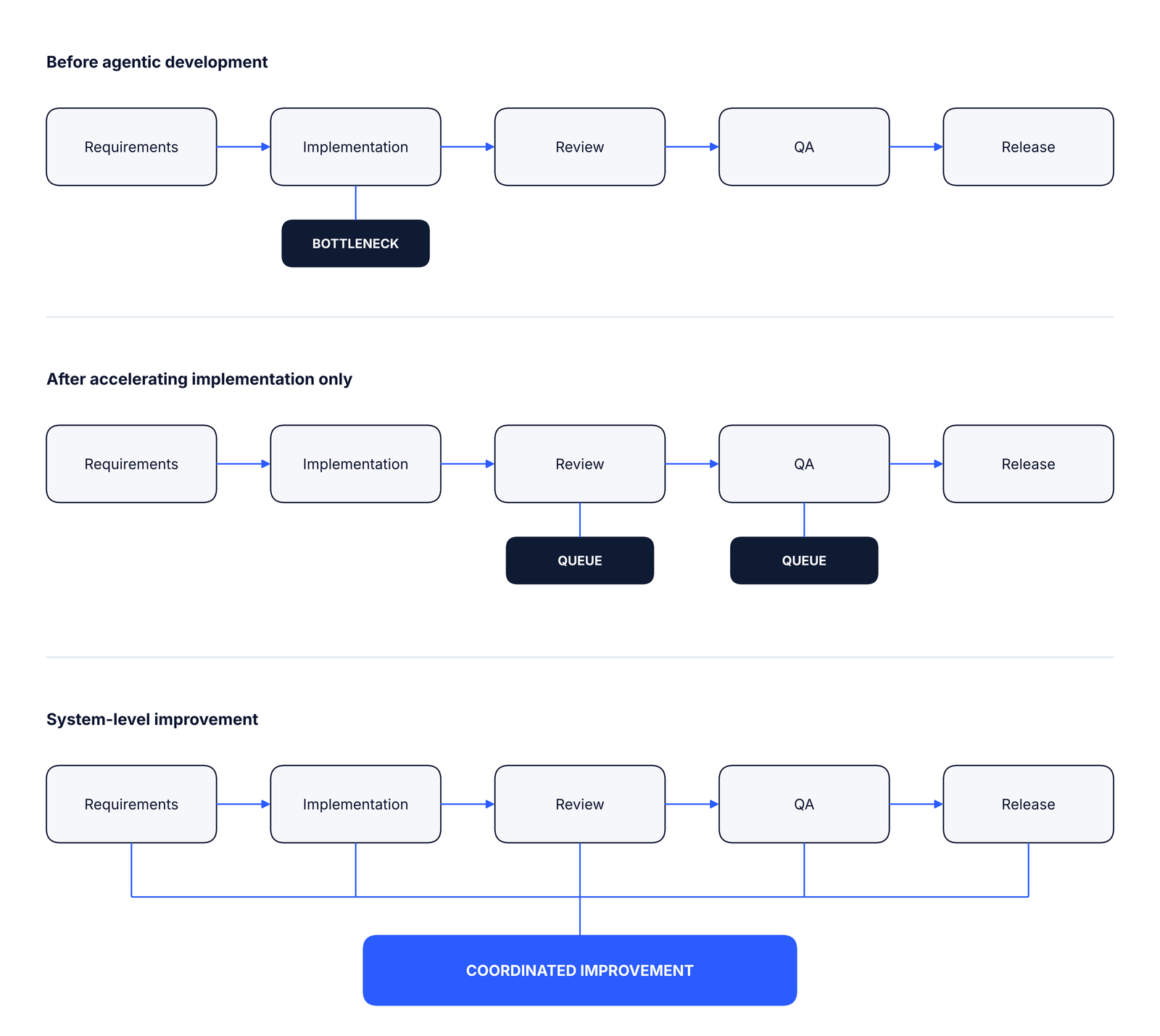
Figure 14. Local optimization versus end-to-end optimization.
Leaders should optimize the whole value stream:
- Set work-in-progress limits.
- Keep change sets small.
- Automate quality gates so humans review what machines cannot.
- Use agent-assisted pre-review for mechanical issues, while preserving human judgment on design and risk.
- Provision verification capacity as deliberately as coding capacity.
Do not judge the transformation by how quickly agents produce artifacts.
Key takeaways — Chapter 14
- Review decides whether a change is an acceptable solution, not whether it looks plausible.
- Require evidence-rich pull requests that explicitly surface test and configuration changes.
- Manage review and verification as capacity-constrained stages of the value stream.
Security, Privacy, and Responsible Execution
Two distinct security responsibilities
| Domain | Objective |
|---|---|
| Agentic engineering security | Ensure agents operate within approved trust boundaries |
| Business application security | Ensure the delivered software meets its security requirements |
The first protects the engineering environment; the second protects the software being delivered. Both are required, and they use different controls.
Threats to the engineering environment
| Risk | Required control |
|---|---|
| Unauthorized repository access | Repository-scoped agent identities and permissions |
| Prompt injection via source files, documents, issues, web content, or tool output | Treat retrieved content as untrusted data; enforce policy outside the model |
| Secret disclosure | Short-lived scoped credentials, redaction, secret management; no long-lived secrets in agent context |
| Arbitrary code execution | Hardened, isolated sandboxes |
| Uncontrolled tool invocation | Tool allow-lists, authorization, and parameter validation |
| Source-code exfiltration | Approved model endpoints and network-egress allow-lists |
| Dependency compromise | Dependency verification, pinning, and supply-chain controls |
| Verification manipulation | Protected acceptance criteria and trusted CI |
| Unauthorized production actions | Independent deployment authorization |
| Malicious or compromised tools, skills, or plugins | Vetting, provenance, signing, and least-privilege tool servers |
The high-risk combination
Prompt injection is most dangerous when three conditions coexist in one agent session: access to private or sensitive data, exposure to untrusted content, and the ability to communicate externally or take consequential actions. Design the harness so that no single session holds all three without strong, deterministic controls. Break the combination by removing one leg: restrict egress, withhold sensitive data, or quarantine untrusted content into a lower-privilege sub-agent whose outputs are validated before use.
Principles for secure agent execution
- Least privilege by default. Grant the minimum tools, paths, and permissions per task, and expire them with the task.
- Distinct agent identity. Agents act under their own auditable identities, not as an engineer's personal credentials.
- Ability is not authorization. The harness must separate what an agent can technically do from what it is permitted to do.
- Enforce outside the model. Sandboxing, network policy, hooks, and permission systems are enforced by infrastructure, not by instructions.
- Human approval for irreversible or high-impact actions. Approval prompts should be rare and meaningful, so that people do not habituate to clicking "approve".
- Full traceability. Record prompts, tool calls, file changes, and decisions so that actions can be reconstructed.
Business application security
Specifications and architecture should address:
- Authentication and authorization.
- Data protection and classification.
- Input validation.
- Tenant isolation.
- Secure integration.
- Secrets management.
- Dependency security.
- Auditability.
- Abuse prevention.
- Applicable regulatory and organizational requirements.
For Track C features, add threat modeling during architecture, and verify the resulting controls independently. Scan AI-generated code, dependencies, and infrastructure-as-code with the same rigor as human-written code; do not assume generated code is safer or less safe.
Risk-based autonomy matrix
| Risk | Representative action | Recommended control |
|---|---|---|
| Low | Read approved repository files | Automated execution |
| Moderate | Modify files in an isolated workspace | Bounded execution within the task contract |
| Elevated | Open a pull request | Governed workflow and independent verification |
| High | Change authentication or shared infrastructure | Independent review and applicable approvals |
| Critical | Modify production systems or sensitive data | Explicit privileged workflow; prohibited by default for general implementation agents |
Key takeaways — Chapter 15
- Treat agent security and application security as separate, both mandatory.
- Avoid sessions that combine sensitive data, untrusted content, and external actions.
- Enforce least privilege, distinct identity, and policy outside the model.
Phase 8 — Release and Deployment
Integrating the harness with CI/CD
The harness does not replace the enterprise delivery pipeline. It produces and refines candidate changes that must pass through trusted release mechanisms.
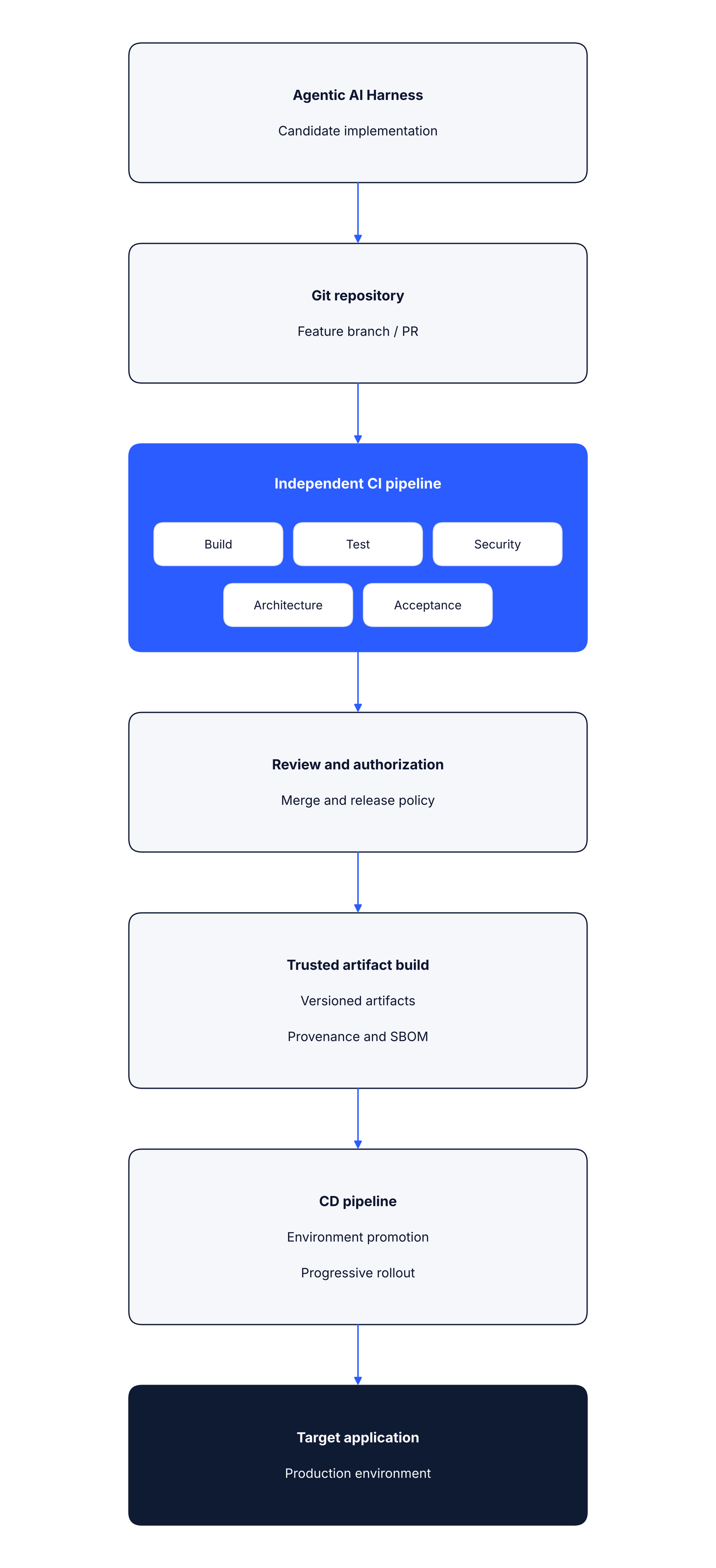
Figure 15. Agentic implementation integrated with governed CI/CD.
If a merge or rebuild yields a different revision or artifact, verification must be associated with the actual release candidate. An earlier passing pull-request build is not evidence that a later, modified artifact is acceptable.
CI/CD quality gates
| Stage | Representative controls |
|---|---|
| Source validation | Formatting, linting, code standards |
| Build | Reproducible builds and dependency resolution |
| Unit testing | Implementation behavior |
| Integration testing | Component interactions |
| Contract testing | API and event compatibility |
| Acceptance testing | Original business requirements |
| Architecture validation | Fitness functions and dependency constraints |
| Security scanning | Static analysis, dependencies, secrets, infrastructure-as-code |
| Artifact publication | Integrity and provenance |
| Release authorization | Approvals and policy checks |
| Deployment | Controlled environment promotion |
| Post-deployment verification | Smoke tests and operational checks |
Release readiness
Before production deployment, establish:
- The exact approved source revision and deployable artifact.
- Required verification evidence.
- Security and architectural findings and their disposition.
- Configuration and infrastructure changes.
- Database migration requirements.
- Operational readiness.
- Deployment strategy and rollout plan.
- Recovery or rollback mechanisms.
- Release authorization per policy.
Deployment strategies
| Pattern | Appropriate use |
|---|---|
| Rolling deployment | Compatible changes across replicated services |
| Blue-green deployment | Environment switching with suitable compatibility controls |
| Canary deployment | Gradual exposure with measurable validation |
| Feature flags | Decoupling deployment from feature activation |
| Shadow execution | Comparing behavior without authoritative side effects |
| Controlled migration | Changes requiring data transformation or schema evolution |
Select the strategy based on the feature's risk, architecture, data requirements, and operational characteristics. For Track C features, prefer progressive exposure with a tested recovery path.
Database and state migration
Application rollback does not necessarily reverse data or schema changes, so database changes need particular care. Use:
- Backward-compatible schema evolution.
- Expand-and-contract migrations.
- Controlled data backfills.
- Migration validation and reconciliation.
- Recovery planning and tested version compatibility.
Do not let an agent generate and execute destructive production migrations without explicit authorization and safeguards.
Key takeaways — Chapter 16
- Agents feed the pipeline; they do not replace it.
- Bind verification evidence to the exact release candidate.
- Choose rollout patterns by risk, and treat data migrations as a separate hazard.
Phase 9 — Production Validation
Deployment success is not feature success
A pipeline can finish successfully while the business capability remains unusable: the service may run while an integration fails, a permission is missing, or a workflow never reaches its intended business state. Production validation must establish that the feature works in its target environment.
Separating engineering execution from the target environment
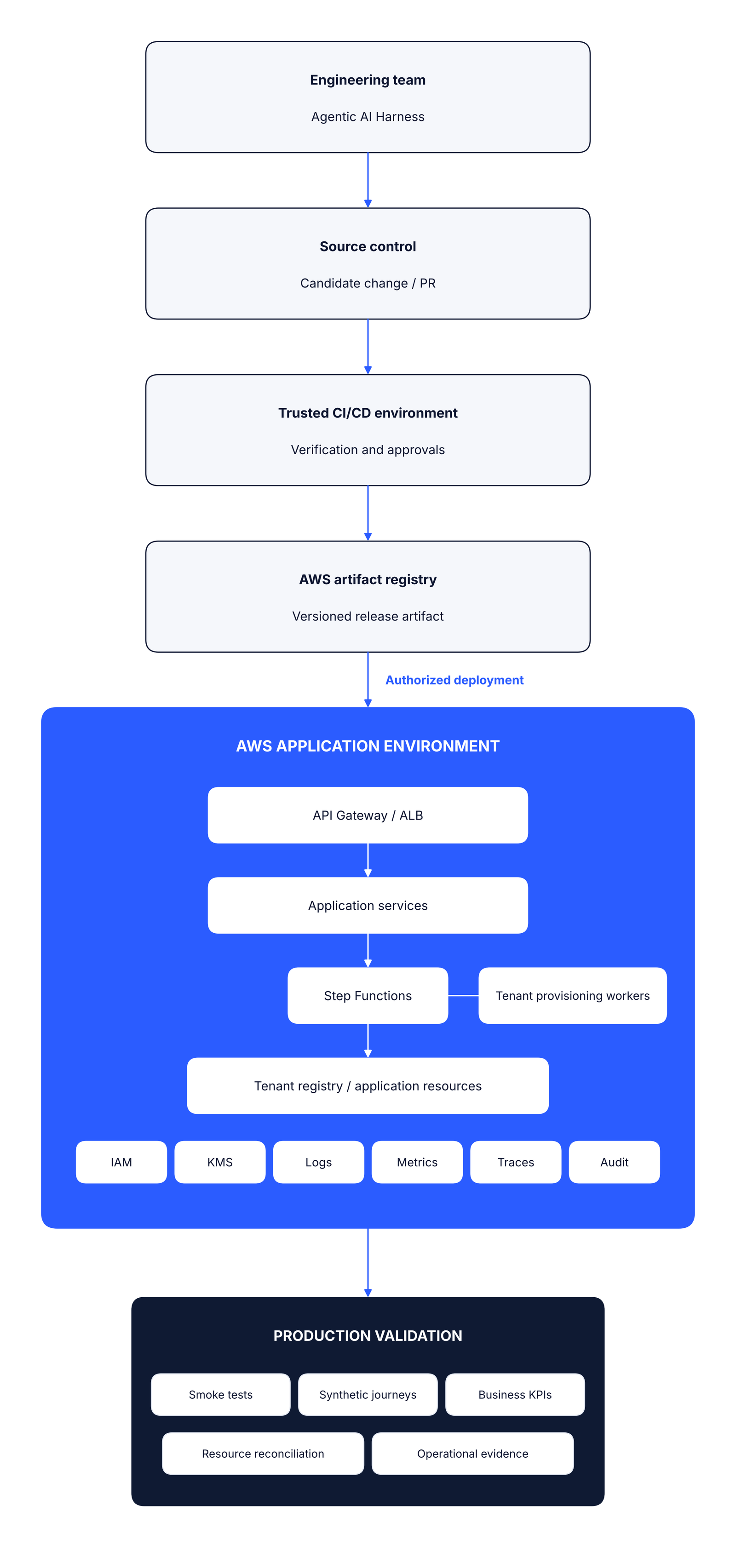
Figure 16. Separation of engineering execution, release infrastructure, and the target AWS environment.
The coding-agent environment must not inherit unrestricted production privileges.
Production validation for tenant onboarding
| Validation activity | Expected evidence |
|---|---|
| API availability | Registration and status endpoints respond correctly |
| Authorization | Approved test administrators can use the feature |
| Provisioning execution | Workflow starts and reaches expected states |
| Resource creation | Required tenant resources exist |
| Tenant registration | Registry accurately reflects provisioning status |
| Isolation | Approved negative tests confirm tenant boundaries |
| Auditability | Required lifecycle and security events are available |
| Observability | Telemetry supports diagnosis |
| Recovery readiness | Approved failure-recovery mechanisms are operational |
Use isolated production test tenants or other approved arrangements. Do not run destructive synthetic tests in live customer environments.
Validating the resulting business state
Feature deployed
      v
Workflow executed
      v
Resources provisioned
      v
Tenant state reconciled
      v
Tenant operational
      v
Business capability available
Figure 17. Validation of the resulting business state.
A successful API response, completed workflow, or deployment notification is not proof of the intended outcome. For TENANT-001, the authoritative outcome is a tenant that is correctly provisioned, validated, activated, and operational, as confirmed by reconciling expected against actual state.
Key takeaways — Chapter 17
- Validate the resulting business state, not just deployment or API success.
- Use approved test tenants; never destructive tests on live customers.
- Keep the coding environment out of production.
Phase 10 — Operations and Learning
Production ownership
End-to-end ownership extends past implementation and deployment. The team establishes:
- Operational service ownership.
- Monitoring and alerting.
- Service-level objectives.
- Incident escalation.
- Failure-recovery mechanisms and runbooks.
- Security monitoring.
- Feature adoption and business metrics.
- A continuous improvement backlog.
Observability and agent-assisted operations
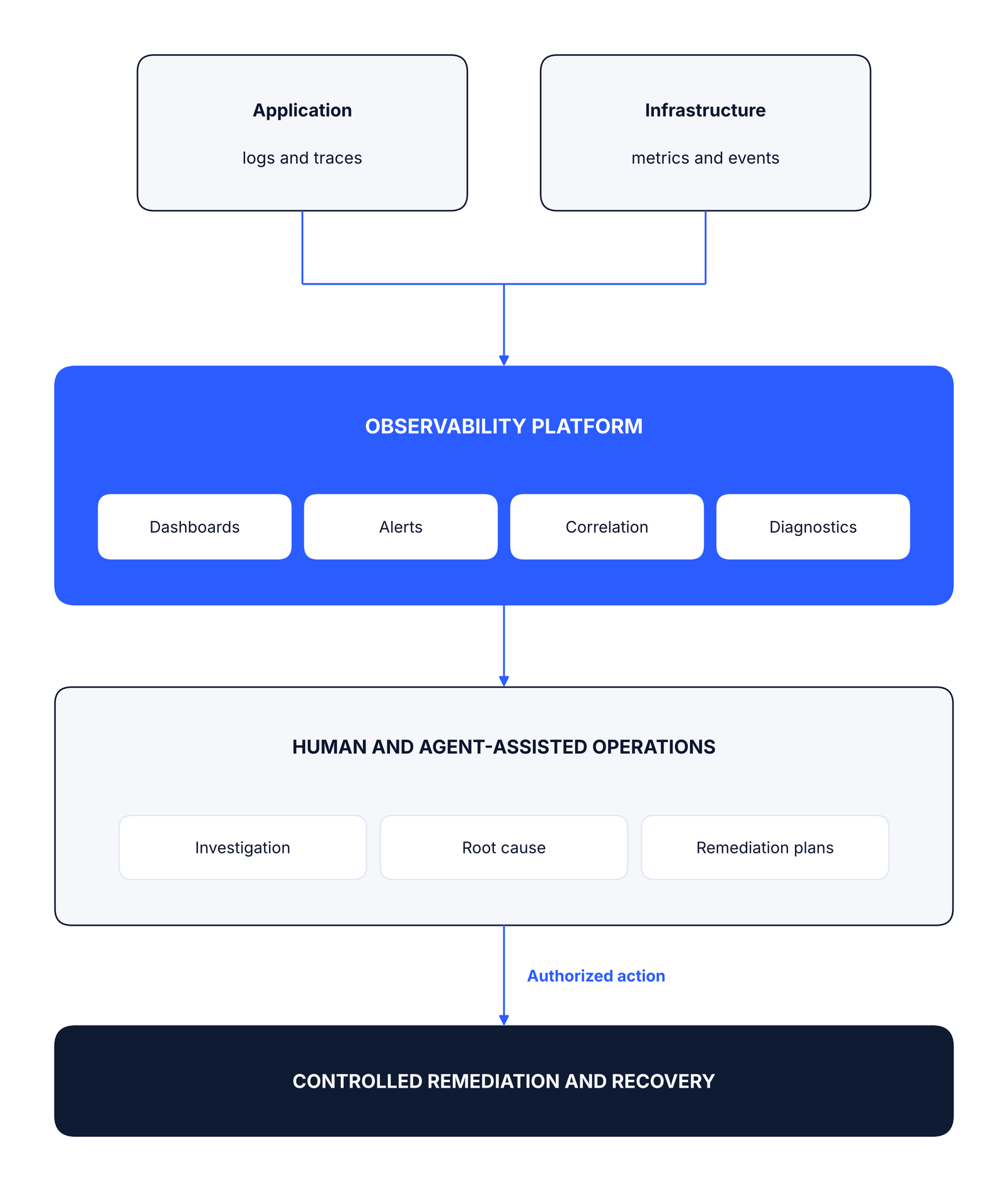
Figure 18. Production operations with controlled agent assistance.
Agents can help investigate incidents, correlate signals, and draft remediation plans. Production actions require their own identity, authorization, verification, and operational controls, and must not be implicitly available to general coding agents.
Example operational metrics
| Metric | Purpose |
|---|---|
| Tenant provisioning success rate | Successful provisioning outcomes |
| Provisioning duration | Onboarding efficiency |
| Workflow failure rate | Reliability problems |
| Recovery success rate | Effectiveness of failure recovery |
| Tenants in non-terminal states | Stuck workflows |
| Authorization rejection patterns | Misuse and security concerns |
| Resource reconciliation failures | Divergence between expected and actual resources |
| Manual intervention rate | Operational automation effectiveness |
Routing production findings
| Finding | Corrective owner |
|---|---|
| Missing business behavior | Product and requirements engineering |
| Incorrect implementation | Feature engineering team |
| Architectural limitation | Architecture ownership |
| Insufficient acceptance coverage | Verification engineering |
| Repeated agent implementation error | Harness Engineering |
| Inadequate lifecycle control | AI-Native SDLC governance |
| Infrastructure failure | Platform Engineering or SRE |
Not every production problem is a harness problem. Correct classification is essential to systematic improvement.
Key takeaways — Chapter 18
- Own the feature in production: monitoring, SLOs, runbooks, escalation, adoption metrics.
- Production remediation uses dedicated, authorized identities, not coding-agent privileges.
- Classify findings correctly before choosing a corrective owner.
Engineering the Evidence Chain
Evidence as a first-class artifact
Every important delivery claim should be supported by traceable evidence connecting business intent, architectural decisions, implementation, verification, release, deployment, and production behavior.
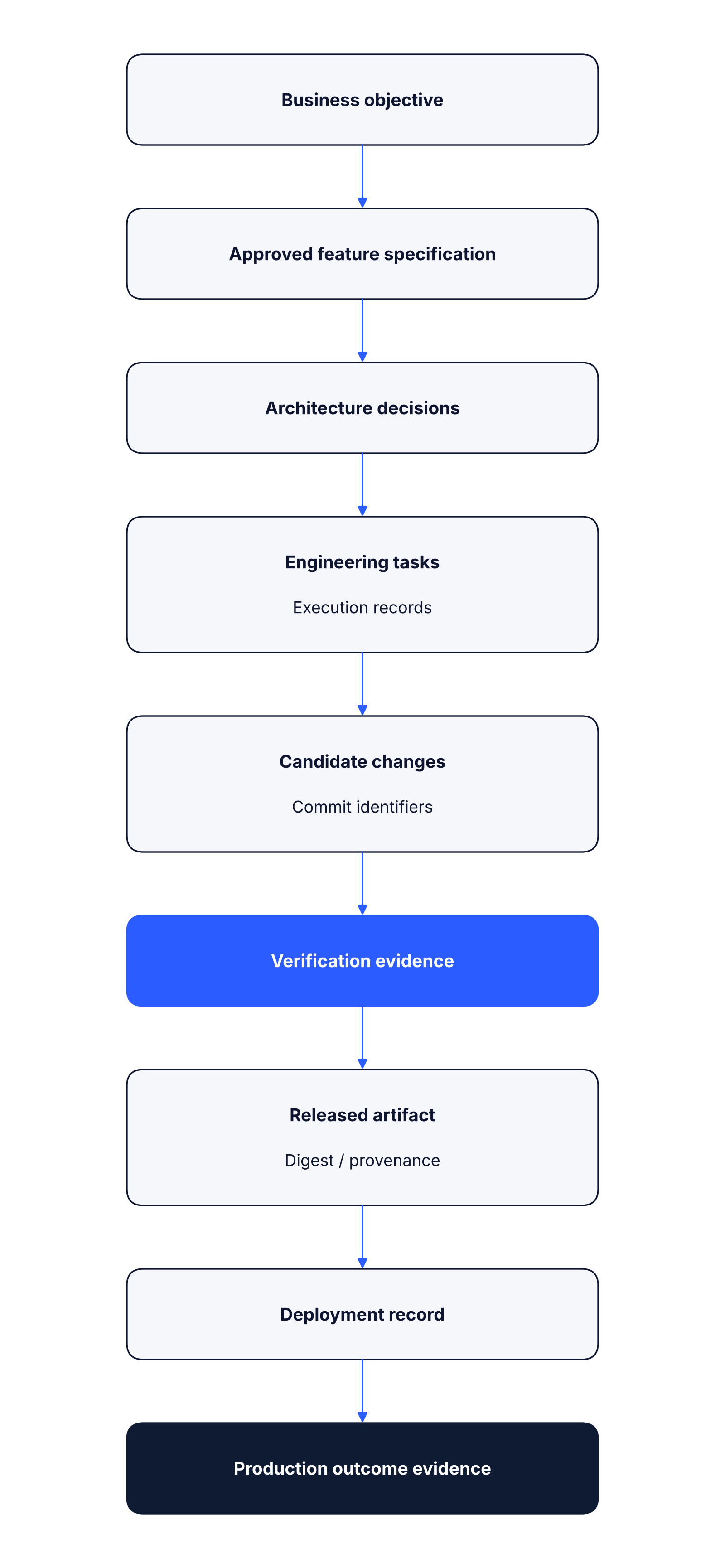
Figure 19. The end-to-end feature delivery evidence chain.
Feature traceability matrix
| Requirement | Design artifact | Task | Verification | Production evidence |
|---|---|---|---|---|
| Tenant registration | API contract | T03 | Registration integration test | Tenant record |
| Asynchronous provisioning | ADR-001 | T04 | Workflow execution test | Workflow execution record |
| Safe retries | ADR-003 | T04 | Idempotency and recovery tests | Reconciliation results |
| Tenant authorization | Security design | T06 | Negative authorization tests | Security telemetry |
| Status tracking | Lifecycle model | T05 | Status API tests | Persisted lifecycle state |
| Operational visibility | Observability design | T09 | Telemetry checks | Production metrics and traces |
Evidence should identify versions, execution records, source revisions, and released artifacts. Agent run traces (prompts, tool calls, file changes, approvals) are part of the execution record and should be retained according to policy.
Evidence integrity
Keep authoritative evidence in protected systems. Implementation agents must not hold unrestricted authority to alter acceptance evidence, deployment records, or production audit artifacts. Retain evidence according to security, privacy, compliance, and operational requirements.
Key takeaways — Chapter 19
- Make every delivery claim traceable from intent to production behavior.
- Include agent execution traces in the record.
- Protect evidence from the agents whose work it evaluates.
Design Patterns for AI-Native Feature Delivery
Pattern catalog
Each pattern below names a recurring problem and a proven shape of solution, in the spirit of classic design-pattern catalogs. Use them as a shared vocabulary in design reviews.
| Pattern | Intent | Typical application |
|---|---|---|
| Specification-First | Establish verifiable intent before implementation | All material features |
| Architecture-Driven Implementation | Constrain implementation through approved architecture | Enterprise systems |
| Context-Prepared Execution | Supply task-relevant knowledge, and no more | Repository-aware development |
| Vertical Slice Delivery | Deliver thin, integrated capabilities | Incremental delivery |
| Contract-First Parallelism | Enable independent parallel implementation | Distributed systems |
| Plan–Execute–Verify | Separate planning, execution, and verification | Complex tasks |
| Checkpoint and Resume | Preserve continuity across sessions | Long-running execution |
| Hook-Enforced Guardrails | Enforce policy deterministically around agent actions | Any governed execution |
| Independent Verifier | Obtain trustworthy completion evidence | Production-oriented delivery |
| Governed Release | Separate implementation authority from release authority | Enterprise CI/CD |
| Production Outcome Verification | Confirm the resulting business state | Operational acceptance |
| Failure-to-Guardrail Ratchet | Convert recurring failures into permanent checks | Continuous improvement |
Pattern: Specification-First
Problem. Agents implement plausible but incorrect interpretations of ambiguous requirements.
Solution. Approve a specification and independently verifiable acceptance criteria before significant execution.
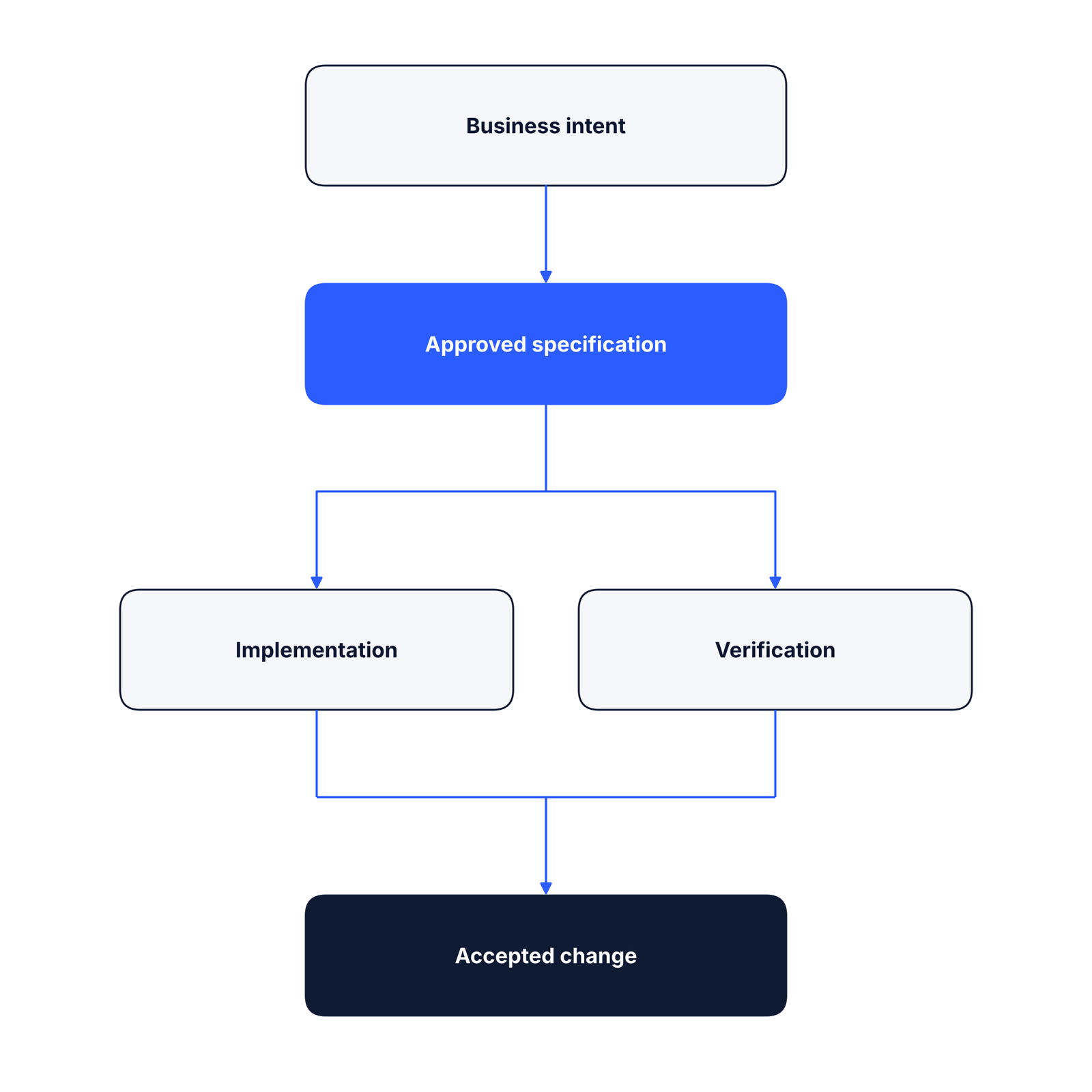
Figure 20. Specification-First.
Consequences. Upfront clarification effort is traded for less ambiguity, rework, and verification inconsistency. Keep the specification sized to the delivery track.
Pattern: Vertical Slice Delivery
Problem. Large horizontal batches delay integration and leave intermediate states hard to verify.
Solution. Deliver thin, integrated capabilities across all layers, each independently verified.
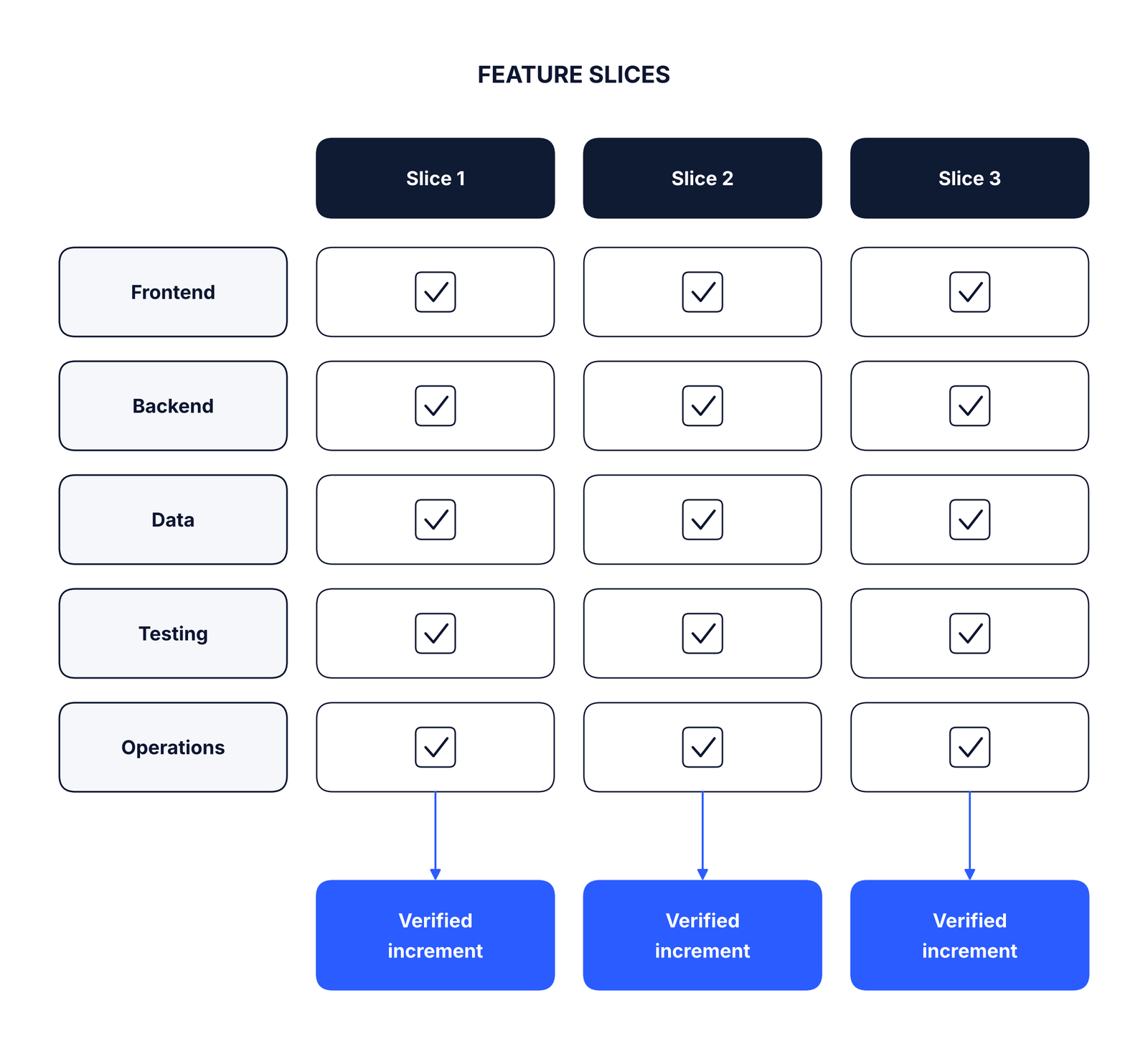
Figure 21. Vertical slice delivery.
Consequences. Earlier integration feedback, at the price of disciplined scope definition and compatibility management.
Pattern: Contract-First Parallelism
Problem. Parallel agents make conflicting interface assumptions.
Solution. Approve interface contracts before parallel implementation begins; verify both sides against the contract.
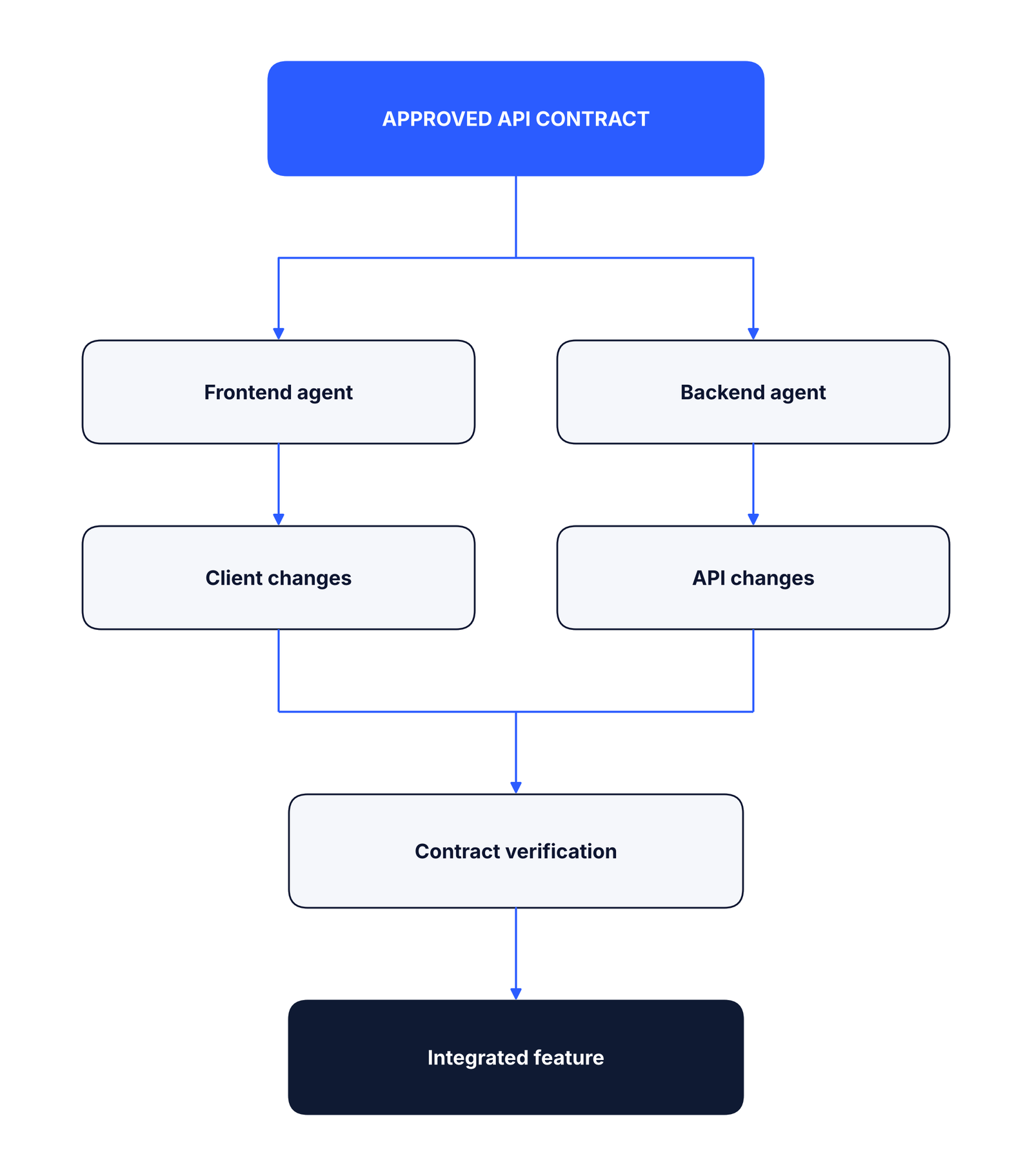
Figure 22. Contract-First Parallelism.
Consequences. Parallel speed-up, but any contract change requires coordinated revision and re-verification.
Pattern: Hook-Enforced Guardrails
Problem. Natural-language instructions are advisory; agents can overlook or misinterpret them.
Solution. Attach deterministic checks and policy enforcement to defined points in the agent loop (before tool use, after edits, before completion), and return fix-oriented feedback to the agent.
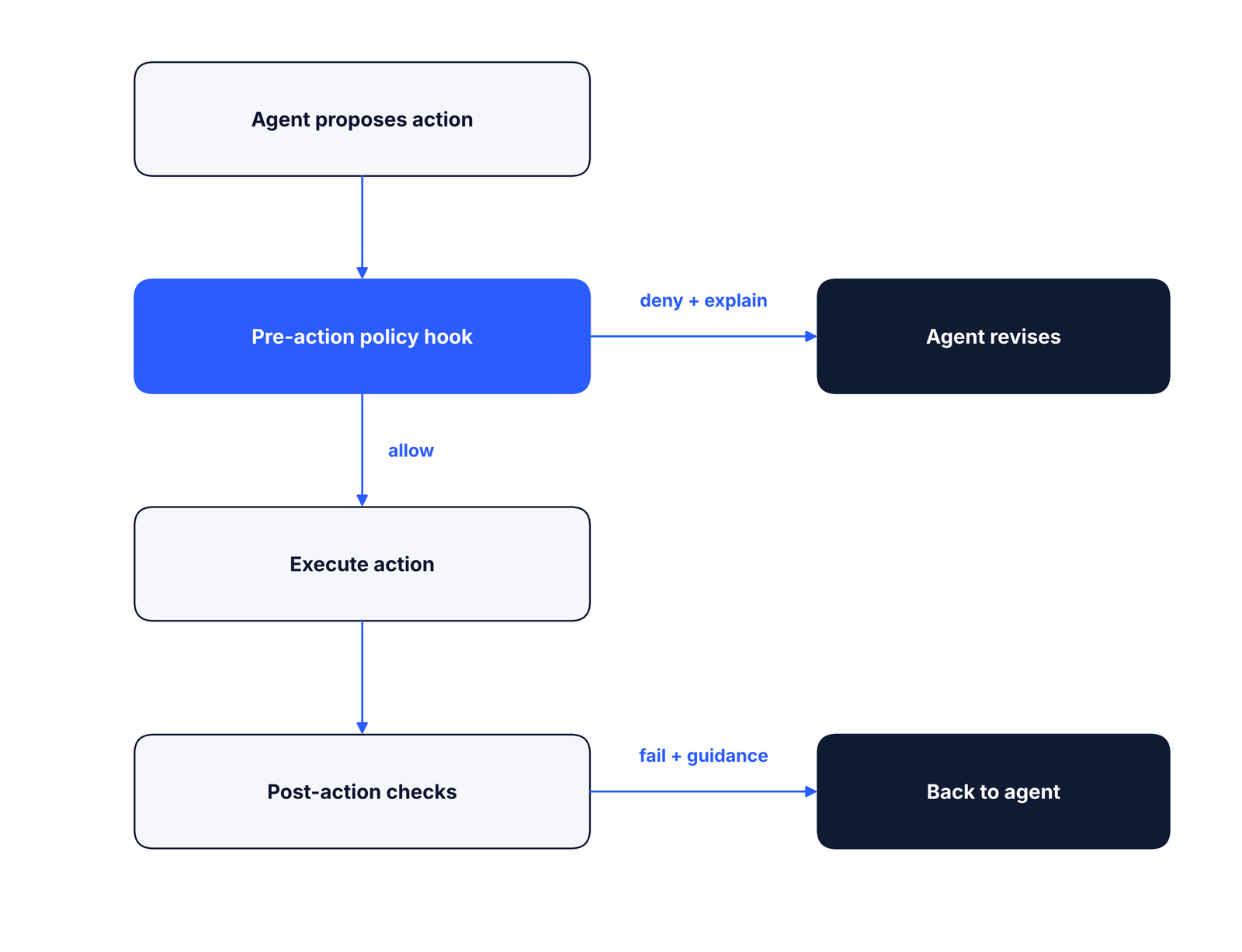
Figure 23. Hook-Enforced Guardrails.
Consequences. Strong, consistent enforcement and faster feedback; requires maintaining the hooks and keeping their messages actionable.
Pattern: Independent Verifier
Problem. Implementation and self-generated tests share incorrect assumptions.
Solution. Establish an authoritative verification mechanism outside the implementing agent's control.
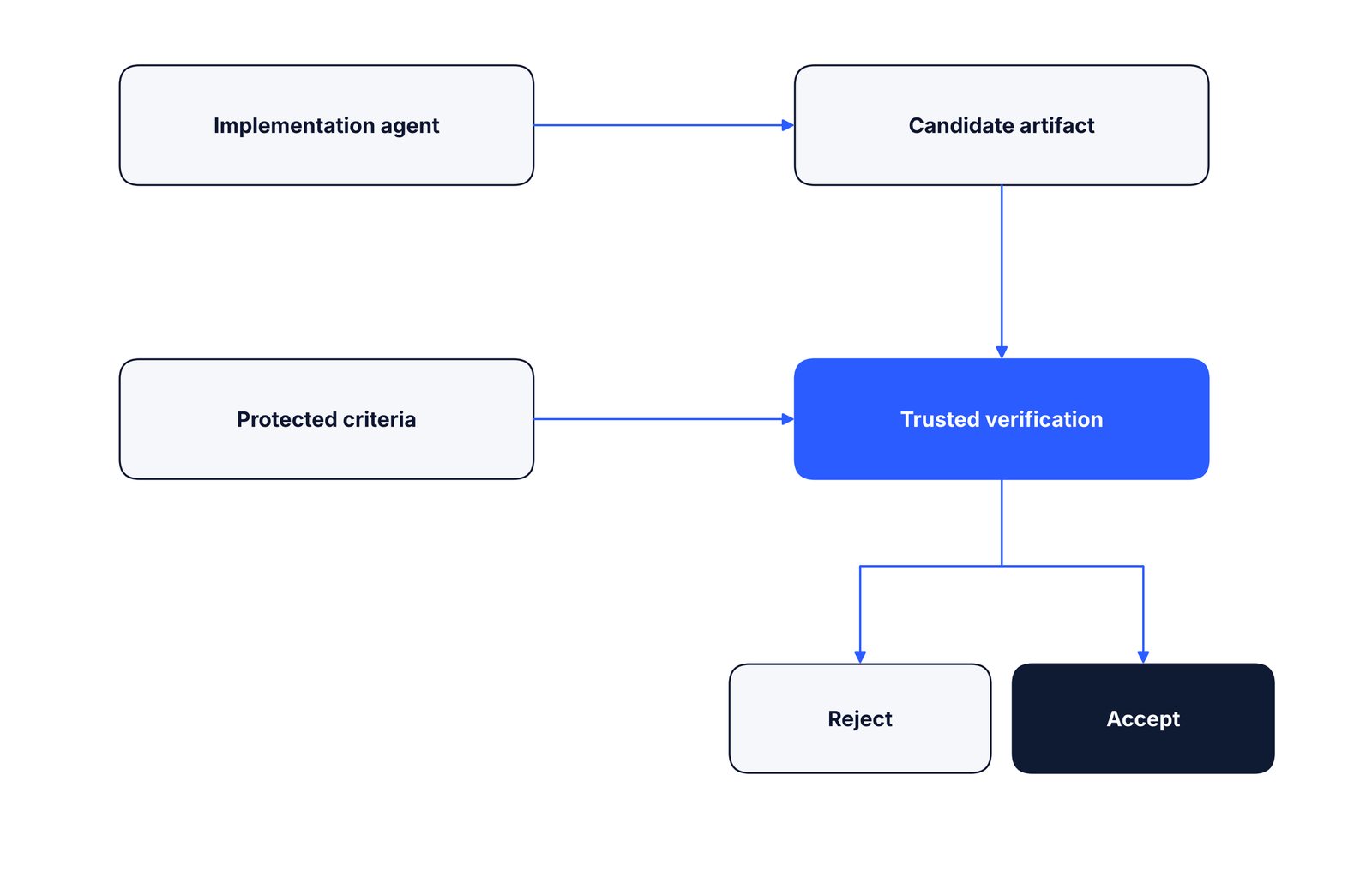
Figure 24. Independent Verifier.
Consequences. Stronger confidence and auditability, at the cost of verification infrastructure and its maintenance.
Pattern: Production Outcome Verification
Problem. Successful deployment or API execution is mistaken for business success.
Solution. Gather evidence that the intended real-world state has occurred.
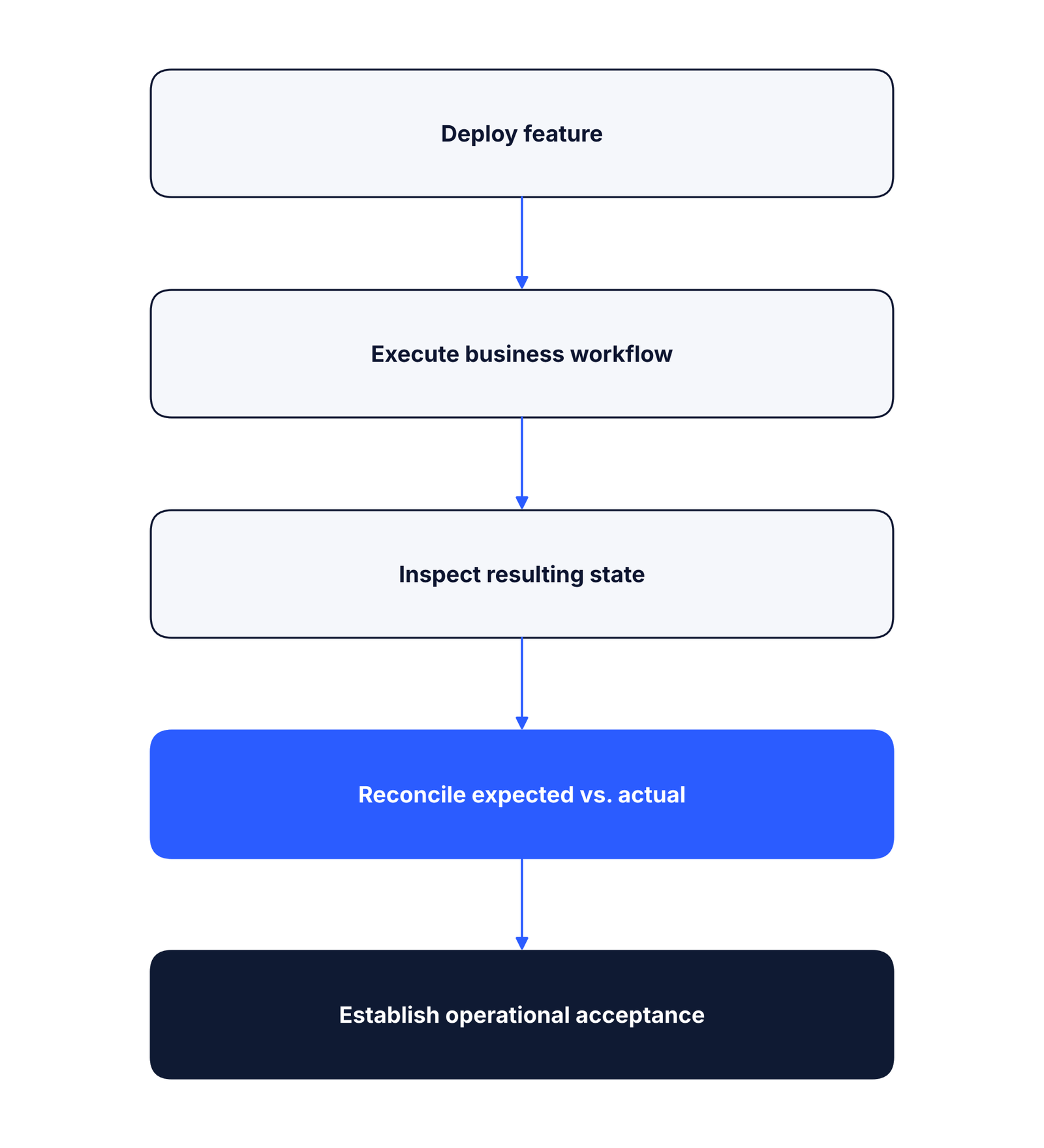
Figure 25. Production Outcome Verification.
Consequences. Real confidence in outcomes, requiring safe production test arrangements.
Pattern: Failure-to-Guardrail Ratchet
Problem. The same agent mistake recurs across features, and each is fixed by hand.
Solution. When a failure class recurs, fix the instance, then encode the lesson permanently: a linter rule, structural test, fitness function, hook, skill update, or protected regression test. Over time the delivery system only becomes stricter and more capable in the areas where it has failed.
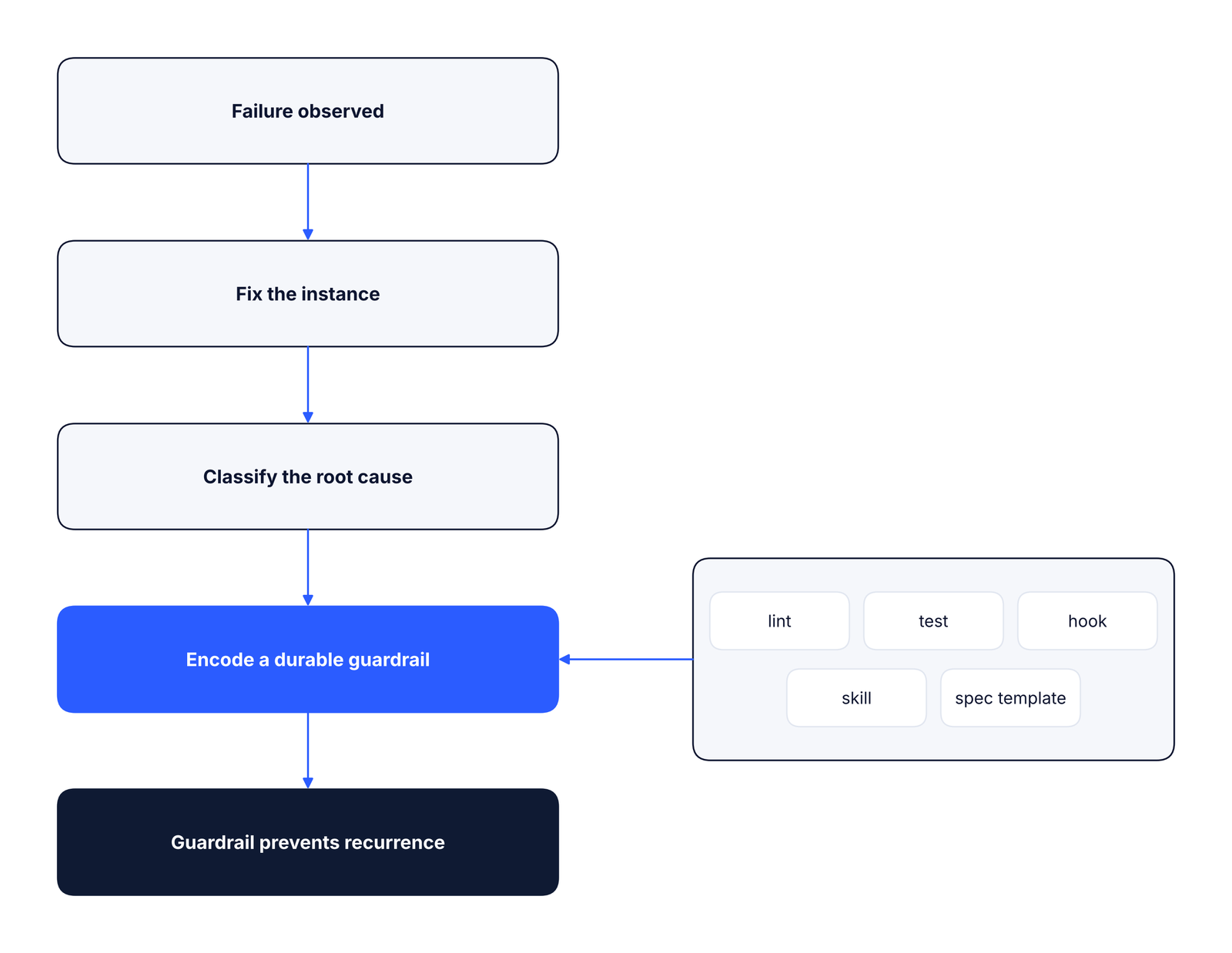
Figure 26. The Failure-to-Guardrail Ratchet.
Consequences. Compounding improvement; requires discipline to avoid accumulating redundant or conflicting rules, so review guardrails periodically and retire those that no longer earn their keep.
The Playbook in Practice: A Complete Walkthrough
This chapter consolidates the running example into one sequence.
Feature delivery stages
| Stage | Engineering activity | Harness contribution | Deliverable |
|---|---|---|---|
| 1 | Understand business requirement | Analyze domain and repository context | Feature brief |
| 2 | Establish specification | Draft requirements; surface ambiguities | Approved specification |
| 3 | Design architecture | Analyze alternatives and existing components | ADRs and design |
| 4 | Prepare context | Resolve repository, architecture, and skill context | Context package |
| 5 | Decompose feature | Generate dependency-aware plans | Task contracts |
| 6 | Implement tenant registry | Execute bounded coding workflow | Persistence changes |
| 7 | Implement provisioning | Generate workflow and recovery logic | Provisioning changes |
| 8 | Implement API and UI | Implement approved contracts | Integrated functionality |
| 9 | Implement infrastructure | Generate approved IaC changes | Deployment configuration |
| 10 | Validate changes | Run local checks; assist correction | Candidate change sets |
| 11 | Verify independently | Integrate trusted verification | Acceptance evidence |
| 12 | Review and authorize | Prepare review artifacts and summaries | Approved release |
| 13 | Deploy | Integrate with governed CI/CD | Production deployment |
| 14 | Validate in production | Assist approved operational checks | Production acceptance |
| 15 | Operate and improve | Assist diagnosis; collect feedback | Improvement backlog |
Representative sequence
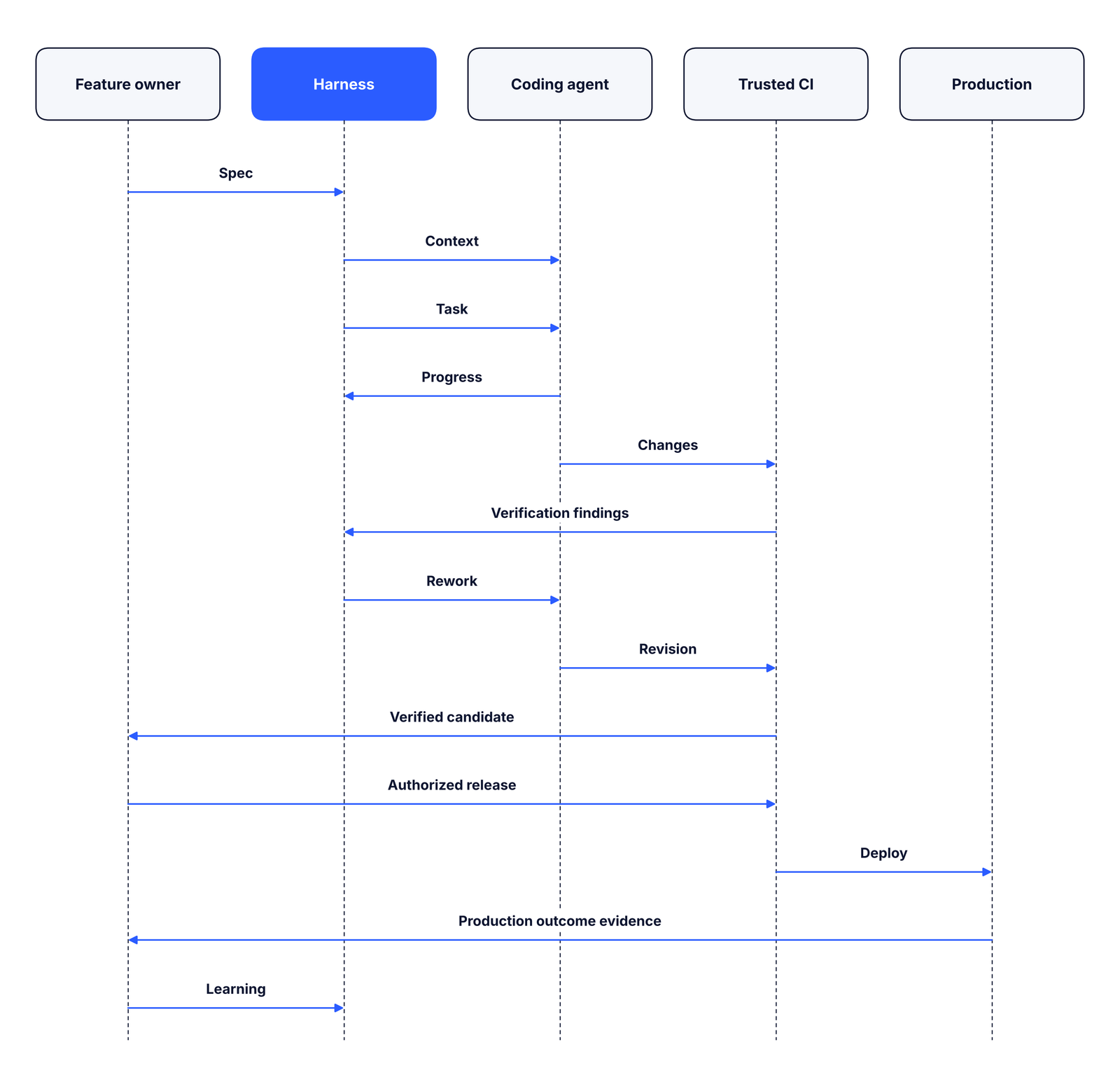
Figure 27. End-to-end agentic feature delivery sequence.
Feature completion package
TENANT-001/
|-- feature-brief.md
|-- specification.md
|-- acceptance-criteria.md
|-- architecture.md
|-- adr/ (ADR-001 ... ADR-005)
|-- execution-plan.yaml
|-- task-contracts/
|-- implementation-summary.md
|-- verification/
|   |-- acceptance-results.md
|   |-- architecture-results.md
|   |-- security-results.md
|   +-- evidence-references.yaml
|-- release/
|   |-- artifact-reference.yaml
|   |-- deployment-plan.md
|   +-- recovery-plan.md
|-- operations/
|   |-- production-validation.md
|   |-- runbook.md
|   +-- improvement-backlog.md
+-- traceability-matrix.md
These artifacts may live in source control, issue trackers, artifact registries, verification platforms, or operational systems. They need not be duplicated into a single directory.
Metrics, Economics, and Business Value
Measure outcomes, not agent activity
Prompt counts, generated lines of code, tool calls, and active agents say little about delivery effectiveness. Measure at three levels.
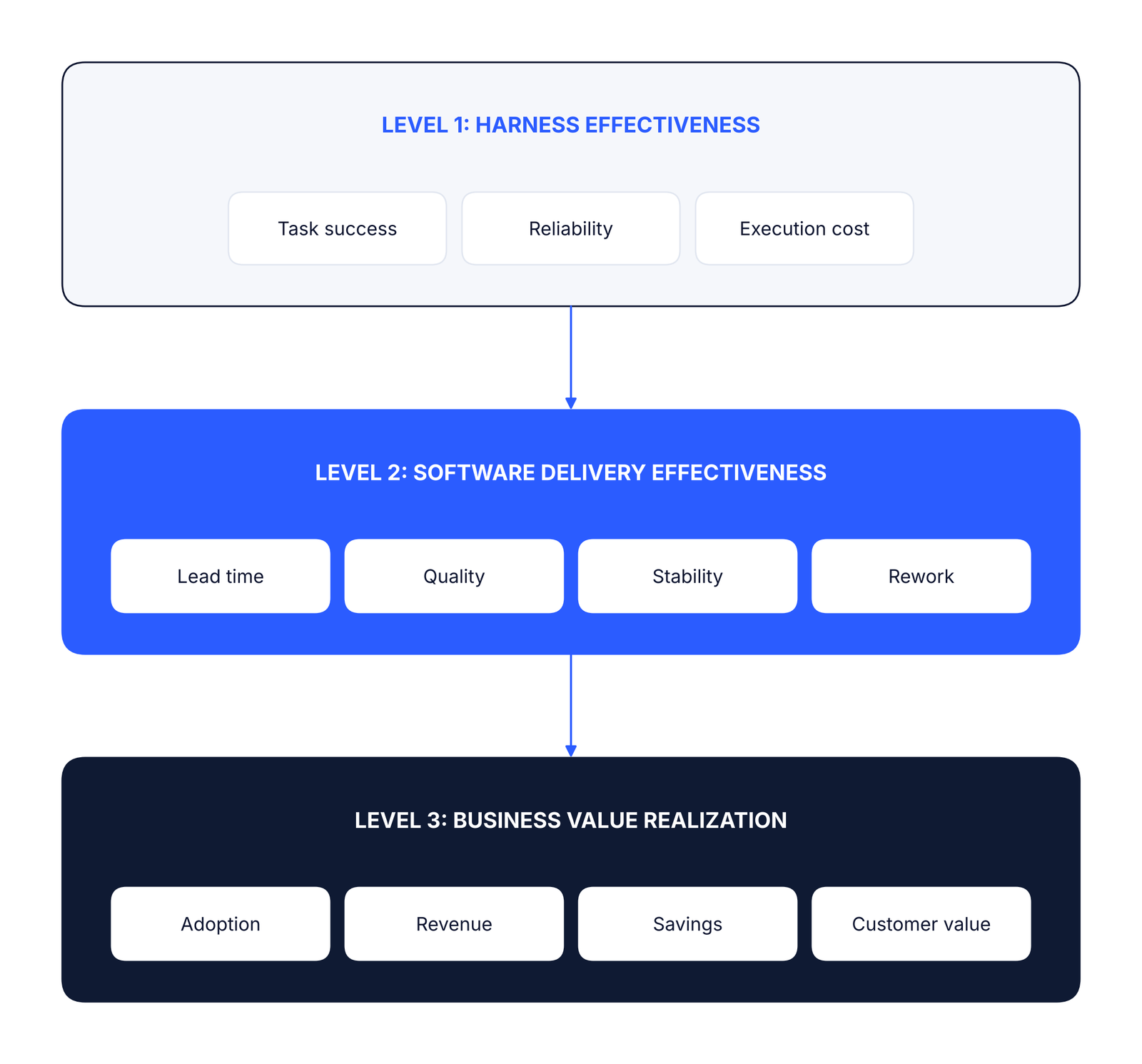
Figure 28. Three levels of engineering performance measurement.
Harness effectiveness metrics
| Metric | Measures |
|---|---|
| Agent task success rate | Independently accepted task executions |
| First-pass success rate | Tasks accepted without corrective iterations |
| Consistency across repeated runs | Whether success holds run after run, not only at best |
| Human intervention rate | Dependence on human assistance |
| Execution failure rate | Reliability of agent execution |
| Recovery success rate | Effectiveness of recovery mechanisms |
| Cost per successful task | Harness execution economics |
| Task completion time | Execution efficiency |
These show whether the harness is improving. They do not by themselves show business value.
Software delivery performance metrics
| Metric | Definition |
|---|---|
| End-to-end feature lead time | Time from agreed feature commitment to production availability |
| Change lead time | Time from a version-controlled change to production deployment |
| Deployment frequency | Frequency of production deployments |
| Change failure rate | Proportion of deployments needing immediate intervention |
| Failed deployment recovery time | Time to recover from a failed deployment |
| Deployment rework rate | Proportion of deployments arising from unplanned production incidents |
| Defect escape rate | Defects found after the designated verification boundary |
| Cost per delivered feature | Attributable engineering and delivery cost per accepted feature |
| Feature rework rate | Proportion of feature work needing corrective implementation |
| Review queue time | Time candidate changes await review |
| Verification queue time | Time candidate changes await verification |
The five DORA software delivery metrics (change lead time, deployment frequency, failed deployment recovery time, change failure rate, and deployment rework rate) are a sound foundation for throughput and instability. Feature-level metrics are needed to assess the full AI-native value stream. Always read throughput and stability metrics together; speed without stability is not improvement.
End-to-end delivery economics
Cost per delivered feature
    =   Human engineering effort
      + Agent execution and inference cost
      + Execution infrastructure cost
      + Review and verification cost
      + Rework and integration cost
      + Allocated platform and release cost
      + Other attributable delivery costs
Include unsuccessful attempts and corrective execution in the measurement population. A cheap first implementation is not necessarily an economical feature.
Illustrative economic comparison
The following hypothetical comparison covers two approaches to delivering comparable features of equal scope and quality.
| Cost component | Conventional | AI-native |
|---|---|---|
| Human engineering effort | $4,000 | $2,000 |
| Agent execution | $0 | $250 |
| Engineering infrastructure | $100 | $150 |
| Review and verification | $800 | $1,000 |
| Rework and integration | $600 | $500 |
| Allocated platform and release | $500 | $500 |
| Total | $6,000 | $4,400 |
Here AI-native delivery lowers attributable cost by about 26.7%. Note that review and verification cost rises even as implementation cost falls. These numbers are hypothetical and are not empirical productivity claims.
Business value realization
For automated tenant onboarding, relevant outcomes include shorter onboarding time, lower manual effort, greater onboarding capacity, fewer provisioning errors, better customer experience, and faster activation of revenue-generating tenants. Establish a baseline before release, track actual results, and account for other factors influencing them.
Key takeaways — Chapter 22
- Measure harness effectiveness, delivery effectiveness, and business value separately.
- Count the full cost, including review, verification, and rework.
- Never claim productivity from code volume.
The Continuous Improvement Loop
Each delivery should improve the delivery system
Every feature produces evidence about the organization's engineering capability. Classify recurring failures and convert them into reusable improvements.
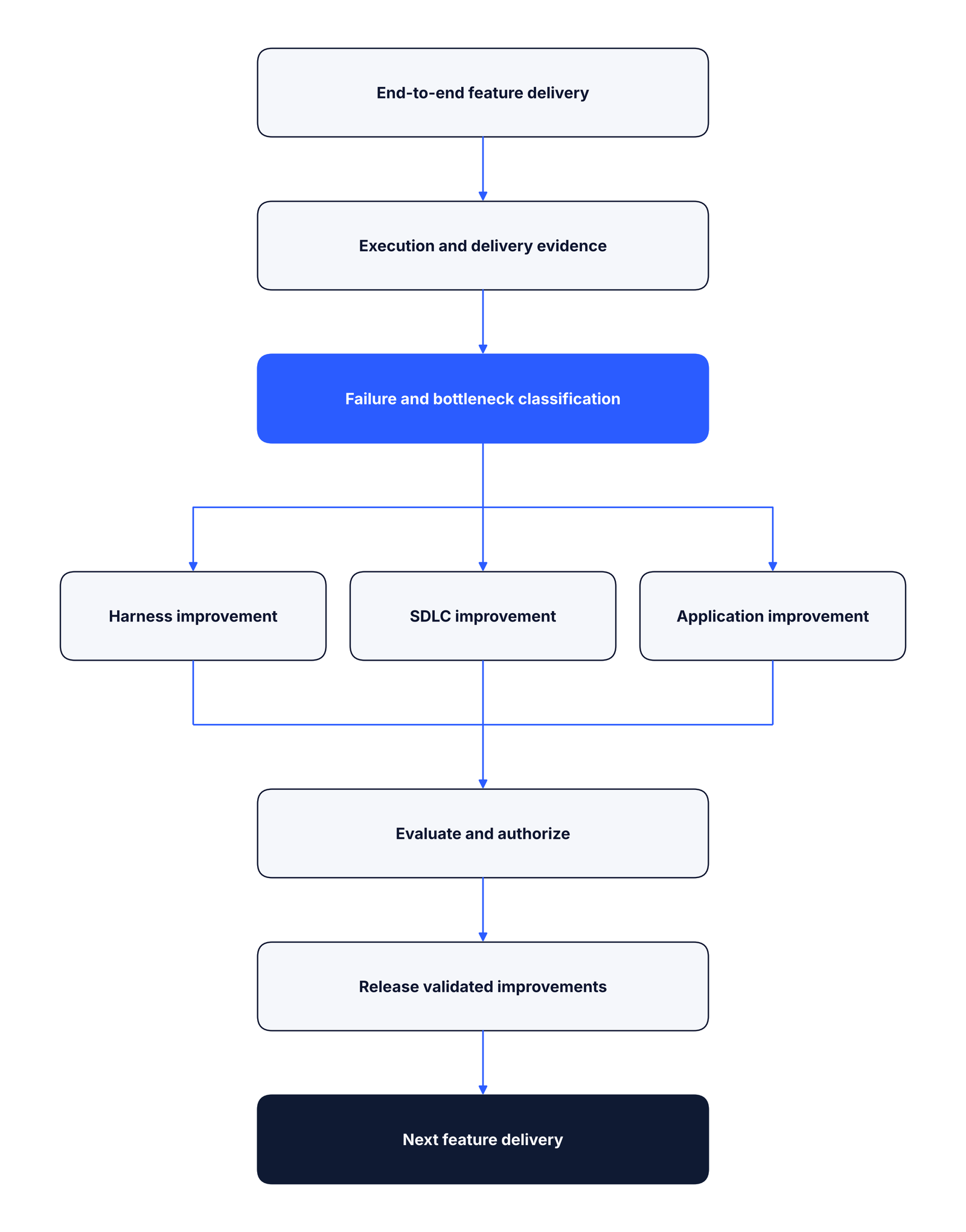
Figure 29. Evidence-driven improvement of the engineering ecosystem.
Failure classification
| Observed problem | Likely improvement area |
|---|---|
| Agent repeatedly misunderstands requirements | Specification quality or task context |
| Agent violates architectural boundaries | Architecture context, skills, or fitness functions |
| Agent repeatedly misuses tools | Tool design, descriptions, and harness orchestration |
| Tests pass despite incorrect business behavior | Independent verification |
| Review queues grow | Operating model and workflow |
| Deployment failures increase | Release engineering and DevSecOps |
| Delivered features go unused | Product discovery and adoption |
| Excessive execution cost | Model strategy, context, and workflow design |
| Recurring application-specific defects | Application architecture or implementation |
The right fix is not always another prompt. Investigate the system-level cause before changing the harness, and validate harness changes against a regression suite before release.
Example: tenant isolation
Suppose agents repeatedly write tenant-related queries without the required tenant restriction. The immediate defect must be fixed. The durable improvement may include:
- Clarifying authoritative tenant isolation requirements.
- Updating reusable architecture guidance.
- Enhancing tenant-aware skills.
- Adding automated tenant-isolation fitness tests.
- Protecting authoritative negative security tests.
- Adding regression tasks to harness evaluations.
- Releasing the evaluated improvement.
Fixing the individual defect is AI-Native Software Development. Engineering reusable mechanisms that reduce recurrence is Harness Engineering. Strengthening mandatory lifecycle controls is AI-Native SDLC evolution. This is the Failure-to-Guardrail Ratchet (Section 20.8) in practice.
Organizational Roles and Leadership
Accountable roles
| Role | Primary responsibility |
|---|---|
| Product Owner | Business intent, priorities, business acceptance |
| Feature Owner | End-to-end delivery accountability |
| Solution Architect | Material architectural decisions and constraints |
| Principal Engineer | Implementation direction, technical judgment, quality |
| AI-Native Software Engineer | Human-agent engineering execution |
| Harness Engineering Team | Reusable execution capabilities and harness reliability |
| Quality Engineering | Independent verification and quality strategy |
| Security Engineering | Security requirements, controls, and risk assessment |
| DevSecOps / Platform Engineering | Controlled build and release infrastructure |
| SRE / Operations | Production reliability and operational acceptance |
| Head of AI Engineering | Strategy, transformation, governance, and effectiveness |
These are responsibility areas, not mandatory separate teams for every feature.
Responsibilities of the Head of AI Engineering
| Responsibility | Expected outcome |
|---|---|
| AI-native engineering strategy | Clear enterprise transformation direction |
| AI-Native SDLC | Standardized, governed lifecycle |
| Harness adoption | Reliable access to appropriate agentic capabilities |
| Operating model | Explicit human-agent responsibilities and autonomy levels |
| Specification standards | Consistent, verifiable engineering objectives |
| Architecture governance | Controlled architectural evolution |
| Independent verification | Trustworthy evidence of correctness |
| Talent development | AI-native engineering competencies |
| Delivery economics | Measurable cost and productivity outcomes |
| Production ownership | Reliable operational feature delivery |
| Continuous improvement | Systematic evolution of practices and harness capabilities |
The goal is not to maximize agent utilization; it is to improve the organization's ability to deliver reliable business value.
The changing role of the senior engineer
| Conventional emphasis | AI-native emphasis |
|---|---|
| Writing implementation code | Directing and validating implementation |
| Individual coding productivity | End-to-end feature effectiveness |
| Manual repository exploration | Governed context preparation |
| Manually decomposed tasks | Structured human-agent execution planning |
| Code review | Code, architecture, and outcome verification |
| Technical execution | Engineering judgment and accountability |
| Repeated manual corrections | Reusable systemic improvements |
Strong programming, architecture, debugging, and testing skills remain essential. Agentic development changes how expertise is applied; it does not remove the need for it. Organizations should also plan for the skill-development effect: engineers who only review generated code can lose depth over time, so deliberately preserve hands-on practice and mentoring.
Adopting the Playbook: Maturity and Roadmap
Five adoption phases
| Phase | Focus | Exit criterion |
|---|---|---|
| 1. Controlled adoption | Bounded workloads; approved harness; repository instructions; isolated execution; human review; basic measurement | Representative tasks completed and independently verified within approved boundaries |
| 2. Structured feature delivery | Specifications, acceptance criteria, architectural constraints, task contracts, reusable workflows | Teams deliver complete, bounded features through a repeatable lifecycle |
| 3. Governed production delivery | Independent verification, fitness functions, security controls, controlled deployment, production validation | Delivery satisfies enterprise production requirements |
| 4. Enterprise-scale transformation | Shared harness across teams; competency frameworks; central governance; delivery metrics; reusable skills | Multiple teams deliver through a consistent, risk-adaptive model |
| 5. Evidence-driven optimization | Optimize workflows, verification capacity, bottlenecks, and economics | Improvements are measured, evaluated, and sustained |
A proposed maturity model
| Level | Maturity | Defining capability |
|---|---|---|
| L1 | Assisted | Individuals use AI coding tools |
| L2 | Structured | Teams use shared context, specifications, and workflows |
| L3 | Governed | Delivery includes independent verification and risk-based controls |
| L4 | Industrialized | Enterprise-wide capabilities and production governance |
| L5 | Continuously evolving | Delivery evidence systematically improves harness, lifecycle, and operating model |
This model supports organizational assessment and planning. It is not a universal industry standard.
Common Anti-Patterns
| Anti-pattern | Why it fails | Recommended alternative |
|---|---|---|
| Prompt-to-production | Bypasses clarification and verification | Specification-driven lifecycle |
| Coding before architecture | Encourages structural inconsistency | Risk-proportional architecture decisions |
| Unbounded feature delegation | Uncontrolled scope | Explicit task execution contracts |
| Context dumping | Dilutes relevance; raises cost | Task-specific context preparation |
| Multi-agent by default | Unnecessary coordination complexity | Simplest effective topology |
| Agent-authored acceptance criteria without independent review | Correlated implementation and verification errors | Protected, reviewed acceptance criteria |
| Agent self-certification | Treats reported success as evidence | Independent verification |
| Oversized pull requests | Overloads review; raises integration risk | Small, independently verifiable changes |
| Ignoring downstream bottlenecks | Moves queues to QA and release | Value-stream optimization |
| Excessive execution permissions | Raises security and operational risk | Least-privilege execution |
| Instruction-only controls | Agents can ignore or misread prose | Hooks, permissions, and sandboxing |
| Uncontrolled production deployment | Bypasses release accountability | Governed CI/CD |
| Deployment equals completion | Ignores real production behavior | Production outcome verification |
| Measuring generated code volume | Confuses activity with productivity | Delivery and business outcome metrics |
| Fixing the same agent error repeatedly | No systemic learning | Failure-to-Guardrail Ratchet |
| Replacing engineering judgment with model output | Weakens architecture and risk decisions | Human-accountable engineering |
Definition of Ready and Definition of Done
Definition of Ready for agentic implementation
Apply these at the level appropriate to the feature's delivery track.
Business and specification readiness
- The business objective is understood.
- Scope and exclusions are established.
- Functional requirements are clear and testable.
- Acceptance criteria are independently verifiable and traced to requirements.
- Relevant non-functional requirements are measurable.
- Open questions have owners.
Architecture readiness
- Affected systems and boundaries are understood.
- Material decisions are documented.
- API, event, and data contracts are defined where required.
- Security and operational constraints are established.
Execution readiness
- Relevant repository and engineering context is accessible.
- Tasks and dependencies are identified, with execution contracts.
- Approved tools and permissions are available and enforced.
- Verification criteria and environments are available and protected.
- Ownership and escalation paths are established.
Definition of Done for end-to-end feature delivery
Implementation
- Required business functionality is implemented.
- Changes are version-controlled.
- Material architectural decisions are satisfied.
- Approved API and data contracts are preserved or deliberately updated.
Verification
- Applicable acceptance criteria are independently verified.
- Required functional and regression tests pass.
- Architectural fitness checks pass.
- Applicable security and non-functional requirements are verified.
- No unreviewed changes to protected tests or verification configuration.
- Evidence corresponds to the released revision or artifact.
Release
- Required reviews and authorizations are complete.
- Deployment artifacts are versioned and traceable.
- Deployment and recovery plans are established.
- The feature is deployed and, where intended, activated.
Production operations
- Production validation has succeeded.
- Required observability is operational.
- Operational ownership is established.
- Runbooks and support documentation are available.
- Business outcome metrics are defined.
Continuous improvement
- Material execution failures are analyzed.
- Reusable harness or process improvements are identified.
- Unresolved non-blocking issues have accountable owners.
The Definition of Done should not require proof of long-term business ROI at release time. Business value realization may require a separate observation period.
The Consolidated Reference Model
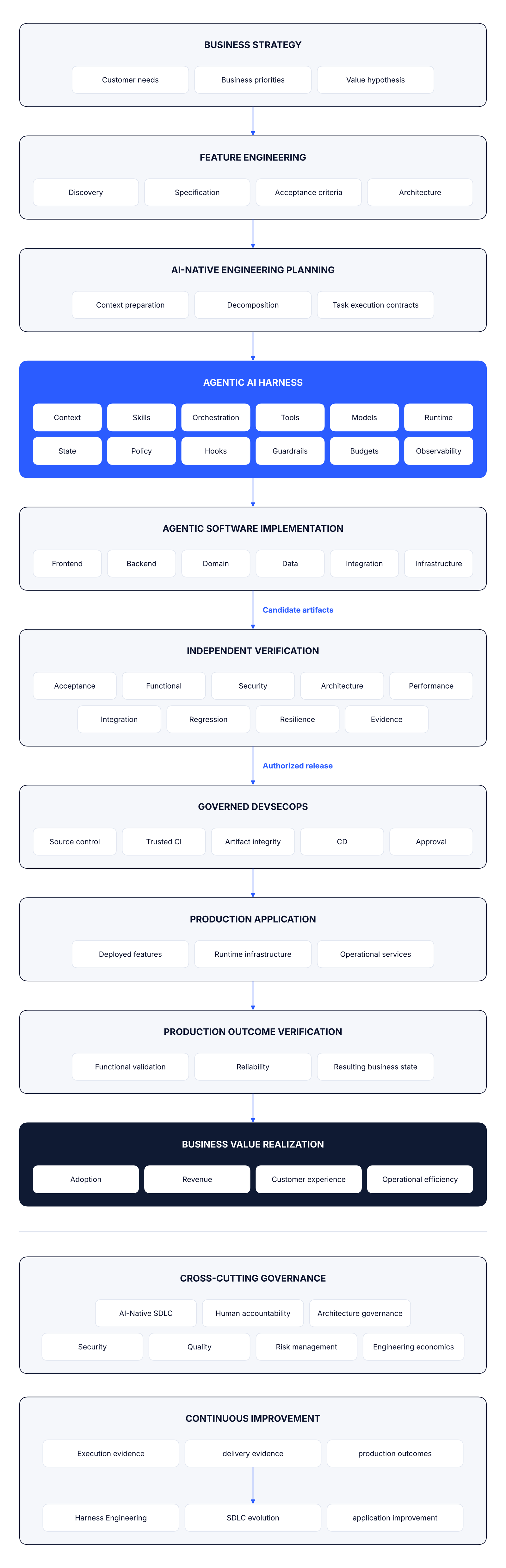
Figure 30. The consolidated AI-native end-to-end feature delivery reference model.
Conclusion: Engineering Outcomes, Not Merely Code
Agentic software engineering changes how implementation work can be performed, coordinated, and accelerated. It does not change the fundamental obligations of software engineering. Requirements must still be understood. Architecture must still be sound. Security must still be established. Software must still be independently verified. Releases must still be governed. Production systems must still be reliable. Business outcomes must still be measured.
The Agentic AI Harness provides the technical capabilities that let human engineers and AI agents collaborate across this lifecycle. The AI-Native SDLC provides process and governance discipline. AI-Native Software Development performs the engineering work. Harness Engineering improves the execution capabilities from delivery evidence. Together they form a repeatable engineering system for delivering business features more effectively without transferring accountability to probabilistic systems.
The philosophy in brief:
Humans establish intent and accountability.
Specifications establish verifiable objectives.
Architecture establishes structural constraints.
The harness enables controlled execution.
Agents accelerate engineering activities.
Independent verification establishes evidence.
Governed delivery establishes production readiness.
Production outcomes establish whether the feature succeeded.
The ultimate measure of AI-native software engineering is not how much code AI generates. It is how consistently the organization can turn business intent into secure, maintainable, reliable, and economically sustainable software.
Appendix A. Glossary
| Term | Definition |
|---|---|
| Acceptance criterion | An observable condition that must hold for a requirement to be considered satisfied |
| Agent | A model operating in a loop of observation, reasoning, and tool use toward a goal |
| Agentic AI Harness | The system of context, tools, orchestration, state, policy, verification integration, and observability surrounding agents |
| AI-Native SDLC | The lifecycle framework defining phases, responsibilities, artifacts, and controls for human-agent delivery |
| Architecture decision record (ADR) | A short document capturing a material architectural decision, its context, alternatives, and consequences |
| Autonomy level | A defined degree of independent action permitted to an agent (A0–A4 in this playbook) |
| Candidate change set | The set of changes produced by an agent, pending independent verification and review |
| Context engineering | Curating the information an agent receives so that it can perform a task accurately and efficiently |
| Delivery track | A risk-based classification (A, B, C) that scales lifecycle rigor |
| Evidence chain | The traceable linkage from business intent to production outcome |
| Execution contract | A task-level definition of objective, inputs, scope, prohibitions, artifacts, verification, and policy |
| Fitness function | An executable check that verifies an architectural characteristic |
| Hook | A deterministic check or policy attached to a point in the agent loop |
| Independent verification | Verification whose criteria, execution, and evidence are outside the implementing agent's unilateral control |
| Progressive disclosure | Loading detail only when needed, starting from a concise map |
| Skill | A reusable, loadable package of instructions and resources for a class of tasks |
| Specification | A reviewed, versioned, verifiable statement of a feature's intended behavior and constraints |
| Vertical slice | A thin, integrated increment of capability spanning all architectural layers |
Appendix B. Further Reading
- OpenAI. Harness Engineering: Leveraging Codex in an Agent-First World.
- Anthropic. Effective Harnesses for Long-Running Agents.
- Anthropic. Harness Design for Long-Running Application Development.
- Anthropic. Demystifying Evals for AI Agents.
- DORA. AI Capabilities Model.
- DORA. Software Delivery Performance Metrics.
- DORA. Value Stream Mapping for Software Delivery.
- Forsgren, N., Humble, J., and Kim, G. Accelerate: The Science of Lean Software and DevOps.
- Humble, J., and Farley, D. Continuous Delivery.
- NIST. Secure Software Development Framework, SP 800-218.
- OWASP. Top 10 for Agentic Applications 2026.
- SLSA. Build Provenance.
Engineer the harness. Deliver through the harness. Improve both through evidence.